
Font Size:

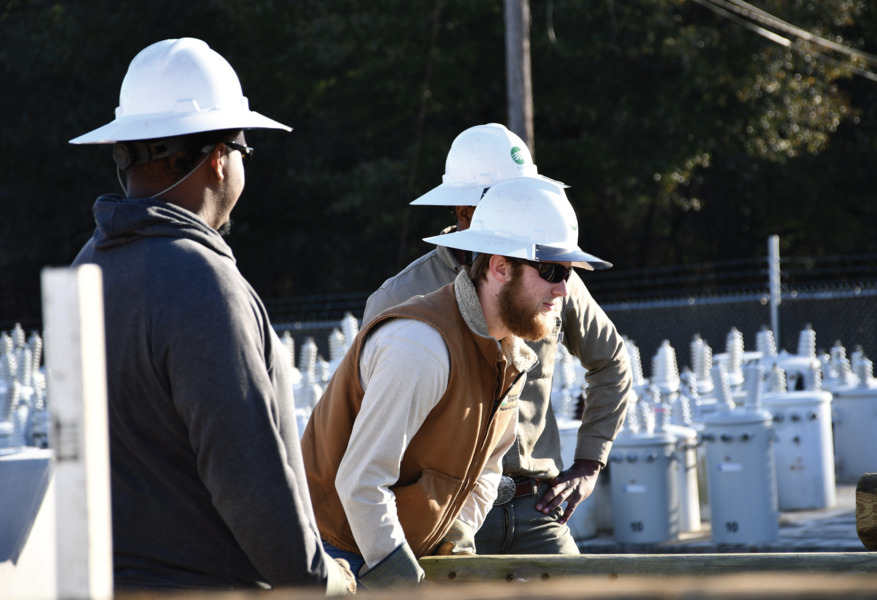
New linemen still have much to learn when they join the ranks at South Alabama Electric Cooperative.
Starting with jobs on the ground, new linemen generally assist their more-experienced colleagues working in buckets or climbing poles. Responsibilities grow as linemen gain more experience.
Since 2023, SAEC has added 8 new linemen to its workforce. These newest linemen wanted careers that offered variety, and they liked the idea of a job that provided something their communities needed.
“I just wanted to do something that I could help out the community with and help give back,” lineman Jackson Adcock says.
It’s a career with risks and rewards. April 18 is National Linemen Appreciation Day — a time set aside to recognize the work linemen do to keep the power on for all of us.
Adcock joined SAEC in March 2025 after attending the electrical lineworker program at Wallace Community College in Dothan. He says he knew what he was signing up for when he chose line work as a career.
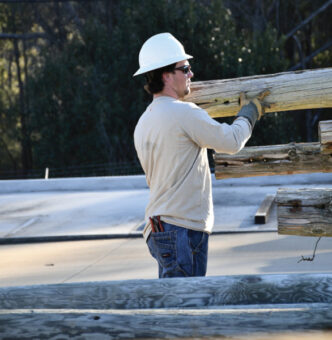
“I knew a couple of things — hard work, long days, working on weekends,” Adcock says.
Thomas Bodiford joined SAEC in March 2023 and is now on a construction crew. He says he enjoys the work of building lines and finally getting some time in the bucket. And he has had to climb poles a few times in areas a bucket truck cannot reach.
“It’s been pretty good,” Bodiford says. “It has good days and bad days. The only bad days are when you’re just out working all night, and you’re tired and want to go home, and you still have to go to work. That just comes with it.”
Early training is now usually done through a lineman school or program affiliated with a college rather than on the job. It’s a commitment, as tuition can start around $5,000, and some linework schools can cost up to $25,000 for 10 to 15 weeks of coursework. In many cases, the tuition covers gear such as boots, hard hats, safety glasses, and gloves.
Prospective linemen spend time in a classroom, as well as learning climbing and other skills. By the time they finish, they’ve typically earned a commercial driver’s license. Some programs also provide training and certification in Occupational Safety and Health Administration safety standards, first aid and CPR, digger truck operations, and pole-top rescue.
Adcock says the hands-on skills he learned in school were more involved than he expected.
“You use your body a lot more with the climbing and then working up high,” Adcock says. “It takes some getting used to. It’s a whole lot different than doing everything on the ground.”
Hayes Horne, who has been with SAEC since October, says he chose line work because he wanted to work with his hands. He knows people who work in the field and feels it would be a good fit for him. So far, he loves the job, especially the people.
Horne says the cooperative regularly emphasizes safety.
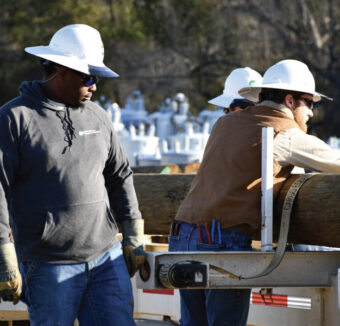
“We have safety meetings once a month, and every morning we have a job briefing, and they all teach safety,” Horne says. “That’s the most important thing out here.”
Bodiford attended Elite Lineman Training Institute in Tunnel Hill, Georgia. Safety, he says, was the core of almost everything he learned.
“Safety is the main thing up there,” Bodiford says. “Everything they got is all safety-related. I learned how to keep your feet in the right places, keep your body position correct, and how to step up. Even outside of the climbing, when we had to do the CDL portion, they always made sure you were safe — checking all your mirrors, checking around the truck when you’re backing trailers.”
Students learn to climb on poles of different sizes, working up to about 60 to 65 feet in height.
When he started climbing, Bodiford says it wasn’t the heights that gave him pause but rather trusting the safety harness to work when needed. He learned the safety gear would hold him when he lost his footing a few times during his climbs. Once he learned to trust the equipment, Bodiford says his nerves settled.
“I’m a big person, so I was kind of thinking, ‘I ain’t supposed to be up off the ground this high,’” Bodiford says. “But I was never scared of the height, I was just scared of the falling part.”


This time of the year is like starting with a clean sheet of paper. Nature blossoms with new growth. Fruit trees begin to bloom with an array of colors. We start planting gardens and flowers in our yards.
People start exercising more because the weather is warmer, but not yet hot. I try to exercise throughout the year. I know the older I get, the stiffer I become. So, I know that motion is lotion to my joints.
Some days I go for a walk at the Troy Recreation Center. The outdoor track is wonderful. It’s great to see all ages out exercising, but I’ve noticed a trend among the younger people exercising. They do not speak to you — even after you speak. It’s not just the younger individuals, but the number of nonspeakers is growing.
This is Alabama. We are so Southern-friendly that we wave to individuals while traveling on our interstates. Why are we losing our Southern nature of being friendly, respectful, and our wonderful hospitality? In my opinion, it is this thing about 3 inches wide and 6 inches long called a cellphone. People are so addicted to their devices that they are willing to endanger their lives, as well as others’, to read a text that’s showing a thumbs-up emoji. It is sad to see individuals operating a vehicle while texting someone. The information is not that important, and if you deem it to be important, then stop your vehicle. Our crews have spoken many times of the near misses they experience while working on the roadways.
With all that being said, these devices can be a great asset when used to communicate with our members. It allows your cooperative to notify you when your power’s out. Before you say it — sure, I understand you know your power is out when you're at home, but our text notification also lets you know when you’re not at home. We also let you know when it’s restored. Communicating with you assures you that we are working on your outage.
With our South Alabama Electric Cooperative (SAEC) app, you can perform a long list of functions. Once you set up your account information, you can view your current statement, which looks identical to the statement you receive in the mail. You can make a payment or click on the account billing history, which stores 12 months of history. You can view the number of billing days and total kilowatt-hour usage for a particular month. Heck, you can even view the actual bill sent to you back in that month.
My favorite SAEC app tool is the usage tracker. There is a default date range of the last 7 or 30 days, or you can select a custom date range. This energy information shows our members the impact of their electric use during cold and hot weather. When we have cold weather, as we had in late January and early February, this usage tool gives you a heads-up on what to expect on your next electric bill. My least favorite tool of the SAEC app is the outage function. This function allows you to report an outage, view your account outage history, and view our current system outage status. I don’t like to see outages, but they do happen.
The SAEC app is a powerful tool for our members, but never access any apps when driving. If you need any assistance with our app, please contact 1 of our member service representatives, and they will help you on your app journey.
We are pleased that a large percentage of you appreciate the daily usage text notification on your electric account. But information is only as good as a current cellphone number. If you change your cellphone number, please let the cooperative know the new number.
Use your phone and our wonderful app, but don’t use them when driving or walking. One may cause you to lose your life or take an innocent person’s life. The other will cause you not to show off our great Southern hospitality and miss God's wonderful creations around us.
Finally, enjoy the new seasonal time because each year they get less and less. God has blessed us with life to serve Him and enjoy his creation. I hope you have a great month.

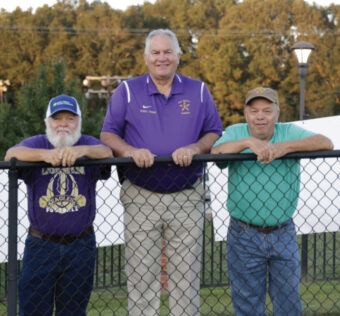
Hosting a fish fry for 100 guests might be a daunting endeavor for some folks, but not for brothers Carroll and Danny Rhodes.
They say it’s an energizing rite of spring to welcome the Pike County Sheriff’s Office staff and cook for them at their home about 4 miles east of Goshen. About 10 years ago, the Rhodes brothers started the tradition, typically held in March or April.
“We’ve known the sheriff all our lives and want him and his deputies and staff to know how much they’re appreciated,” Carroll says. “For an event this big, we count on volunteers to help us, too, and several people give us donations.”
Pike County Sheriff Russell Thomas says everyone appreciates the brothers’ generosity.
“It’s a chance for us all — staff and volunteers — to get together and enjoy good company and food. The brothers have such a true servant’s heart,” the sheriff says. “When they first suggested the fish fry, they paid for it all. They’re generous, respected, friendly, always upbeat, salt of the earth, and will help anyone. For decades, they’ve been such a big supporter of our schools and churches with cooking at events.”
The fish fry for the sheriff’s office is just one example of the countless times the brothers have prepared food, especially their signature award-winning camp stew made from a secret family recipe. They’ve grilled burgers for ballgames, fried fish for school and church fundraisers and helped with camp stew for the volleyball team.
“We’re just 2 bachelor brothers living in our family home doing what we love — cooking and helping others,” Carroll says. “It’s how we were brought up. For several years, depending on their schedule, our friends Larry Snyder and Royce Stroud helped us with our stew. Royce passed on, so we like to think he’s looking down on us, making sure we’re still doing everything just right.”

Danny says helping out is their way of giving back to their community.
“The community has been so good to us all our lives; we never forgot it,” Danny says. “This is our way to repay that kindness.”
Their father died when they were young. Their mother, Mary, and older sister, Annette, taught Danny and Carroll to cook. A 3-ring binder serves as their cookbook and holds the family recipes, some in their mother’s and sister’s handwriting.
“We still have a cookbook our sister made with our favorite family recipes,” Danny says. “Don’t ask us to make biscuits, though. We ain’t mastered that yet.”
Graduates of Goshen High School, the Rhodes brothers say they bleed purple and gold, still watch Eagles games, and are honored to have more than 5 decades of service to the school’s athletic boosters. The brothers support school events throughout Pike and Crenshaw counties.
Former Goshen football coach Bart Snyder nominated Carroll and Danny for the Troy Exchange Club’s 2025 Book of Golden Deeds Award. In June, the brothers received the award given to those who serve their community faithfully.
“They’re truly pillars of our community,” says Snyder, a board trustee for the South Alabama Electric Cooperative. “As long as I can remember, they’ve given of themselves to help others — especially the youth of the communities that make up Goshen. From church activities, youth rec league games, to anything that goes on with the schools in Goshen and the surrounding areas, they’re always there to support programs. They’re a blessing for my family and me. Honestly, anyone who crosses their path will receive a blessing. They’re great men, and our world sure needs more like them.”
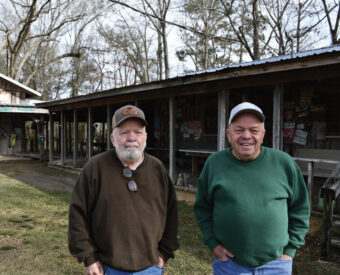
Donna Jones, the exchange club’s vice president, says the brothers are kind and humble.
“They always greet you with a smile,” she says. “They have big hearts, which they spread across the community. They’re fine Christian men. I’ve known them for many years and am proud to call them my friends.”
Carroll says the award was a complete surprise.
“It’s really special to us,” he says. “We don’t do our cooking to get attention.”
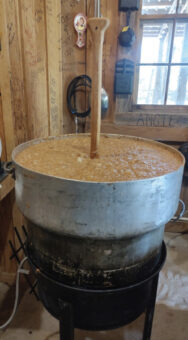
While generous with their servings of stew, the brothers concede they are protective of their complete recipe. For 3 consecutive years, they won Goshen’s Camp Stew Cookoff. They credit their uncle Roy Shaver and Earl Folmar, a neighbor and close friend, for teaching them how to make it, step by step.
“We’ve got a few secrets we can’t give away, but are glad to share the basic ingredients — beef, chicken, pork, tomatoes, onions, and ketchup,” Carroll says.
When they started, they used a cast-iron pot, but soon outgrew it.
“People wanted so much that we had to switch to a heavy-duty 25-gallon pot,” Carroll says.
They make camp stew year-round. From October to about March, they stir up a monthly batch in their cookhouse at home. Working together for decades, the brothers’ culinary choreography requires no words as they do their tasks.
“I start cooking the meat and seasonings — don’t wait till the end to put seasonings in,” Danny says. “Then Bubba starts peeling potatoes. That’s what I’ve always called him because I couldn’t pronounce his name when we were kids. Then I start tearing up the tomatoes and onions in the food processor and cook that with the meat, too. You have to start with fresh ingredients and stir constantly so it won’t scorch on the bottom.”
When the brothers are not cooking, they’re fishing the Conecuh River or hunting deer “to share with those who need the meat.”
They retired from the Alabama Department of Transportation, where Carroll worked for 36 years and Danny for 25 years.
“We done got a little age on us and are slowing down a little,” Carroll says, adding they’d like to find the right person to carry on their stew-making tradition.
“I’m 69, workin’ on 70, and Danny’s 68, so we’d like to find someone to keep on making it. As long as we can push the paddle around, we’ll keep making stew. We’ve been doing it so long, it’s hard to quit.”

South Alabama Electric Cooperative (SAEC) wants members to have as much information as possible to manage their home’s energy use.
So, earlier this year, the cooperative began sending members a daily text notification about their kilowatt-hour electricity use for the day. Like e-billing and online bill pay, text notifications are the latest digital tool SAEC provides in response to members’ requests.
“It’s helping members manage their accounts better,” SAEC Vice President of Member Services Andy Kimbro says. “We are offering the tools that have been requested heavily by our members. Information is critical in helping members make decisions that can affect their bills.”
The text notifications on daily electricity use come from the same system SAEC uses for outage notifications. Not only can members get notifications on usage, but they can also receive notifications when their e-bill is ready or when their bill is due in two days. The due-date reminder is not sent to members who have already paid their bills. Members can also specify the time of day they want to receive texts. Notification settings can be adjusted through the cooperative’s mobile app or online on the SAEC website.
Kimbro says the text notifications on energy use can throw up red flags for members. Use that suddenly spikes could indicate problems with a heating and cooling unit or a water heater leak, causing the appliance to run excessively.
“You catch those things if you see them daily versus getting it at the end of the month,” Kimbro says.
Members who don’t want daily texts about their energy use can set a threshold to receive notifications if their use surpasses a certain kWh benchmark. Since the text notifications started going out, members have been surprised by their daily use, Kimbro says. Members can also opt out of text notifications completely. But, Kimbro says, when they see their daily use, members can make more informed decisions about how to conserve and save on their energy costs.
“Our membership has requested this, and we’re trying to respond to our members in a positive way,” he says. “We’re trying to give them power by giving them information.”
Technology constantly evolves, and that is what Jaiden Trawick likes about his job as an information technology specialist at South Alabama Electric Cooperative (SAEC). Hired in May 2024, Trawick enjoys the challenges that come with an ever-changing field.
I support the day-to-day operations of the IT department — troubleshooting hardware or software problems, installing new equipment, and assisting my colleagues with any technical issues they may have. I’m also responsible for delivering our IT and information security training, making sure employees understand best practices.
Working at South Alabama is great because I get real responsibility and input at my workplace, even though I’m in an entry-level role. I can meaningfully contribute, and I’m not limited to a small set of tasks. That level of trust makes the work more engaging and helps me feel like my efforts matter.
learn a lot at work. IT is a constantly evolving field, so there’s never a point where you feel like you’ve learned everything. Each day brings a new challenge, problem or technology to figure out. Constant learning can feel overwhelming to some, but I like having to stay curious and adapt.
In my opinion, the biggest impact SAEC has is providing an essential service on a not-for-profit basis. Since there are no shareholders to satisfy, we can provide more affordable electricity instead of making a profit. Money is reinvested back into our members and the community, instead of being sent elsewhere.
I love to play chess — even though it makes me feel like the dumbest person in the world sometimes.
You only get 1 life, don’t waste it by worrying about what others think.
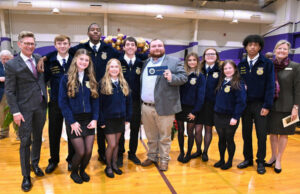
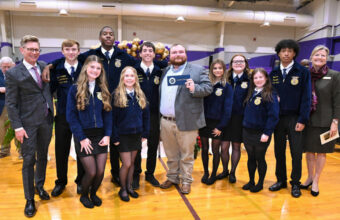
When Goshen High School agriscience teacher Christian Stanley was told he was needed for an assembly, his first thought was that the school’s Agriscience Academy was receiving recognition.
He had no inkling that a national awards program wanted to recognize him as an outstanding K-12 teacher and give him a cash prize of $25,000 to spend as he saw fit.
“I’ve always been 1 to push my students into the spotlight,” Stanley says, admitting it was cool and surprising to receive a Milken Educator Award.
In December, he stood in front of cheering students, fellow teachers, and others as his name was announced as Alabama’s 43rd recipient of a Milken Educator Award since the state joined the program in 1998. Stanley is the first recipient from Pike County Schools.
“Christian Stanley excels as an educator, mentor, colleague, and community leader,” Milken Educator Awards Vice President Stephanie Bishop said during the event. “The Pike County Agriscience Academy is unparalleled. Students are lucky to have such rich, hands-on experiences that allow them to make meaningful contributions to the global economy and build the foundation for a bright future.”
The Milken Educator Awards program is an initiative of the Milken Family Foundation and is hailed as the “Oscars of Teaching.” Surprise presentations are held in school assemblies across the country honoring early- to midcareer teachers for their achievements and for the promise they show as educators. There is no formal application or nomination process for the awards.
Bishop, a 2001 Virginia Milken Educator, and other Milken Educators attended Stanley’s presentation along with dignitaries such as Alabama Superintendent of Education Eric Mackey.

“Mr. Stanley represents everything we hope for in Alabama classrooms,” Mackey said during Stanley’s award presentation
“He has a heart for students, provides excellent instruction and has a deep commitment to his school and community.”
The Milken Educator Awards program has given more than $76 million in individual cash prizes since 1987 and invested over $146 million in the national network to help recipients broaden their impact by encouraging young people to consider a career in education.
Stanley, now part of a national network of over 3,000 Milken Educators, says his own agriscience teacher had a big impact on him and led to his career choice.
“Personally, what it means to me is being able to help empower my local community and my students,” Stanley says of the award. “That’s the part that I honestly really care about, being able to utilize this award and the recognition that comes with it to allow people to see how great of a program we have, how great of a community Goshen is. Professionally, it tells me the hard work we’re doing here at Goshen High School is being seen on a statewide and nationwide level, and that’s excellent.”
Stanley’s love of his profession centers around his students. He gets excited when he hears from first-generation college students or those who chose a career path they might not have otherwise known about had he not exposed them to it.
“The thing that I enjoy the most about education is whenever the students come back and tell me about the impact I had on their life, or whenever I see what they’re accomplishing,” Stanley says. “That’s really the biggest thing to me that really strikes me about education that you really don’t get in a lot of other professions."
While Goshen has students from traditional agriculture backgrounds, Stanley says the majority of students have no experience living on a farm.
Stanley is originally from a rural community in southern Illinois. He graduated with a bachelor’s degree in ag education from Southern Illinois University before he came to Auburn University as a graduate assistant to work on his master’s degree. This is his 4th year at Goshen High School and its Agriscience Academy, which is unique in offering dual enrollment for students in 10th through 12th grades. Students can earn short-term certificates or an associate’s degree in agricultural technologies before they even graduate high school.
But Stanley says the Goshen program is also unique in the diversity of agriculture offerings.
“We have 3 commercial- sized greenhouses, we have aquaponics where we have fish, we have cattle, we have goats — so, we hit on a little bit of everything,” Stanley says. “I think that’s really unique for kids because it allows them to see what they really enjoy in the agriculture industry, and sometimes, more importantly, what they really don’t enjoy that much and couldn’t see themselves doing.”
Stanley says he and his wife, Madison, plan to use his $25,000 cash prize for their son, John-Rillis, who is now 3 months old. “We’re going to put that toward a college fund for him to ensure he has that ability whenever he gets to that age,” he says.
Well, the college football season is over. The Alabama deer season is fast closing. But it’s still winter, so what else is there to do?
For romantic guys like me, you need to turn your focus to your wife or girlfriend. February is the month of love, and Valentine’s Day is February 14.
Lately, I’ve been writing about the changes in the electric industry, but I would like to focus on a specific change at South Alabama Electric Cooperative.
1 of your long-term cooperative employees is retiring in February. Chris Sanders has served the cooperative faithfully for over 40 years. Now he has decided to focus on another chapter in his life.
Chris and I have worked together at the cooperative for 33 years, but we have known each other our entire lives. Yes, we are second cousins, but we are as close as any brothers. Just ask his wife, Tammy. Her regular complaint about our long phone conversations: “Don’t y’all see enough of each other that you don’t have to talk to each other all the time.”
Chris is the general foreman for your cooperative. He has basically held every position for the outside employees. To say I am proud of Chris is an understatement. I think about how God blessed us both with great careers. If you had told us about our cooperative careers over 40 years ago — when we worked together at the peanut-buying point in Ariton — we would have laughed our socks off. No way we could see this in our future. God is definitely good.
Chris’ attention to serving cooperative members is unparalleled. He has done all he can for members and fully understands they pay for us to have jobs and retirements. I don’t want to paint our working relationship as all serious. Laughter fills the office many afternoons, which is why I will miss him.
Chris and I grew up in a time when dads were tough on male children, wanting them to be the best. Chris is younger than me, but I remember a football game in his senior year at Zion Chapel High School. He played running back when he normally played center and linebacker. He scored four touchdowns. We celebrated on the field after the game, and Chris’ dad, Johnny Sanders, known as J.A., came up to Chris and said, “Son, on that last run, if you would have cut it back to the right sideline, you would have gotten touchdown number 5.”
That was how dads were then, always pushing us to be better.
Chris and I have talked about how the tough way they raised us made us into the men we are today. J.A. would be proud of the career Chris has completed.
1 of the hardest things to do in leading your cooperative is saying goodbye to employees/friends because we are family here. Not working with Chris will be tough, but I know his next chapter will be as full and fun as the chapter he’s closing at South Alabama. I may not see him as much, but I’m sure we will burn up the phone, and I am sure I will hear Tammy in the background saying, “My goodness, don’t you all ever get tired of talking to each other?” Well, Tammy, the answer is no.
Happy retirement to my cousin, brother, friend, and employee. You have earned it, and I have to tell you just 1 more time as your boss, “Tighten up, Cod.”
Now that the South is basketball country, February is a warmup to March Madness. But February can produce some very cold weather, and electric bills can still be high. So, please conserve electricity use.
I guess I should address my earlier statement about being romantic.
I am as romantic as an elephant is eloquent moving around a china shop. My first date was to the movies with my to-be wife to see the romantic classic “First Blood.” Being the romantic guy, Rambo was setting a great example for us other romantic guys.
So, I’m not romantic, but I will say Happy Valentine’s to my wife and daughters. Enjoy your time with all your family. It is all way too short.

A new year serving the members of South Alabama Electric Cooperative has begun. The older I get, the faster the years seem to pass.
As a young lad in 1966, the first season of “Star Trek” aired — I was trying to use some Scottish words (“young lad”) to honor my favorite character, Scotty. On the show, Captain Kirk would order Mr. Zulu to go to warp speed. All I know about warp speed is it was fast, and I feel the years passing by at Warp Speed 7.
I don’t like New Year’s resolutions because most are broken very quickly. I like to think! Mostly, I think about my character as it relates to my faith and service to my Lord and Savior, Jesus Christ. Next, I think about my character as a husband, a father, and PawPaw to my grandsons. If I don’t think about these attributes of my character, Satan will get a foothold in my life. I ask Jesus each day to guide me down his path, not mine.
The other day, I read about an organization where all they do is think.
The article addressed the issue of artificial intelligence data centers sponging up excess energy capacity. There are areas around the country where electricity prices have increased twice as much as inflation. This increase is hovering around 18%. Your cooperative has not changed any electricity rates in more than 2 years. For 2026, we budgeted a slight increase of 3.2%, mainly due to the higher cost of power, higher interest rates, and the cost of building an electric distribution plant.
The think tank blames soaring energy demand on AI data centers. But the real impact of data centers is not on the electric grid yet. When you look at the data, which I’d expect those thinkers would do before throwing out solutions, the initial capacity shortage is from regulations causing power generators to close baseload fossil fuel plants before their end of life. These were either not replaced or were replaced with intermittent power facilities like solar or wind. When you close more than you build, you fall short!!
If you can get equipment like generators and transformers, building a baseload natural gas power plant takes about 4 years. Over the past 2 decades, electric use has been flat. Manufacturers have long lead times supplying utilities because they are not tooled up to the new demand for these generators and transformers.
Is the surge of AI data centers causing more electricity demand? Yes. Can we solve that problem? Yes. I believe in capitalism and the American can-do spirit.
The think tank’s road map to solving the problem includes AI data centers putting heat pumps in households currently using inefficient electric heating, cooling or water heating. They also want data centers to provide batteries and a 5 kW solar panel system for suitable homes.
They say it’s time to reject the idea that the solution is adding more fossil fuel power plants to the grid, while ignoring the missed opportunity inside millions of households with existing links to the grid.
We don’t need to be exclusively in any 1 source of energy. We need to be diversified in our energy portfolio. But let me address each roadmap scenario.
First, heat pumps work best when a home is properly insulated. Otherwise, homeowners may use more power to get to their comfort level. How will manufacturers produce all those heat pumps, and who will install them? It puts us back into the same short supply scenario as we are in with generators and transformers.
Second, investing in home batteries and 5 kW solar panels. As my oldest grandson, Kristian, would say, “Pawpaw, what would happen if?” What would happen if we were to have 10 days of extremely cold weather with some snow and limited sunshine? The batteries die, and the solar panels do not produce. The electric grid would have to be able to support the additional demand from those homes. This has already occurred, sadly, in February 2021. The electric system failed in Texas, and people died. This scenario from the thinkers increases that risk.
In my opinion, the underlying goal of these thinkers is not to solve the electricity demand issue. It’s to push their plan for exclusive renewable energy at any cost.
Your cooperative has a reasonable, not perfect, track record for serving our members. We’ve been pushing energy-efficient heat pumps and insulated homes over my 33-year career.
Y’all have a great month, and think about it.
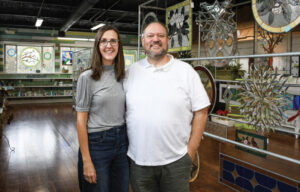
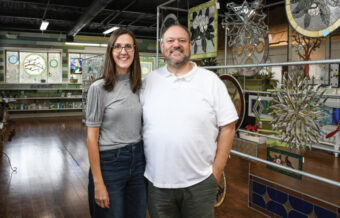
The craft behind stained-glass art hasn’t changed much over the years. There are water jet machines for cutting repetitive pieces or making more difficult cuts, and software makes it easier to resize original designs.
But the art still takes the same hands-on skills David Adams learned from his late father.
“I started doing glass when I was 11,” David says.
At the gallery of Adams’ Glass Studio in Troy, high windows allow natural light to shine through the many stained and beveled-glass creations. Near the front entrance, candy and packaged nuts are sold.
Sam Adams, David’s grandfather, started the family business in 1953 as a roadside pecan stand on Highway 10 in Clio.
U.S. Highway 231 was being expanded to 4 lanes through Troy, and Sam sought to catch the business from the traffic detoured around construction.
The business, first located under a big oak tree not far from the Pea River, did so well that Sam decided to buy land on the completed 4-lane U.S. 231 south of Troy and open a permanent location.
Charles Adams, David’s father and Sam’s son, started the stained glass side of the business years later, making Adams Nut Shop a place where 1 could stop for boiled peanuts, pecans, and artistic glass. Charles taught art at the school in Clio before attending art courses at Troy University, learning kiln-formed glass techniques from the late Troy artist Ed Walter. It was during that time that Charles also learned to make stained glass.

The original store had a nut and candy shop on the top floor while Charles created his glass pieces in the building’s basement. That building burned in 2011 when a pipe slipped loose from a wood-burning stove, spreading fire rapidly through the old building. Fortunately, nobody was hurt, and the family rebuilt the business.
David and his wife, Melanie, worked behind the scenes of the business with Charles until he passed away in 2021. Even since taking over, they still work their other jobs. David has worked for the Retirement Systems of Alabama in Montgomery for 20 years, and Melanie is the secretary at Brundidge Methodist Church. The family attends services at Brundidge Methodist, and it is also home to the first stained-glass window Charles crafted for a church. There are a few part-time employees at Adams’ Glass and 1 full-time employee who has been with them for decades, helping manage things during the week.
But in the evenings and on Saturdays, the couple is at the glass studio.
David and Melanie have 4 daughters, and they hope will 1 day take over. While Melanie worries about losing the glass art craft, she loves how the business has evolved and wouldn’t mind seeing 1 of their daughters help the business evolve more into other art mediums.
Melanie says it means a lot to them when customers who knew Charles visit.
Charles would sit near the front counter and solder like David does now, and customers would come in and talk, Melanie says. Charles could carry on a conversation while soldering, never even looking up.
“People loved him,” she says of her late father-in-law. “It’s neat to see the history, to be a part of something like this.”
Repeat customers often return to buy gifts, selecting from a collection of stained glass flowers and topiaries, bride and groom cake toppers, crosses, and angels. David can create custom pieces from photographs, although without details of people’s faces. Nativity sets are popular, and customers add to their collections every year.
The studio buys glass in sheets, already colored or in clear textures. The glass is then cut for the custom stained-glass designs. With kiln-fired glass, powders and pieces of glass are heated together to form colors and designs — it’s a form of glass art that David hopes to do more when he retires from his job in Montgomery.
Adams’ Glass Studio uses the same copper foil method of stained-glass art created by Louis Comfort Tiffany in the 19th century.
“With the copper foil, we can get a lot more detailed design,” David says.
Melanie wraps the edges of the glass in the copper foil for David to solder together, using a worn wooden dowel to press the foil to the glass. A chemical agent known as flux is used to ensure the soldering wire adheres to the copper foil smoothly and creates a strong bond between the glass pieces.
The glass art industry and tools have evolved, David says. Glass is more expensive, and vendors have gone out of business. After the 2011 fire destroyed the Adamses’ original hand-drawn designs, David used software to recreate them from photographs. The software also made resizing designs a lot easier. The craft, David says, still requires a human touch.
“Glass is just an unforgiving medium if you don’t have the right touch,” he says.