
Font Size:

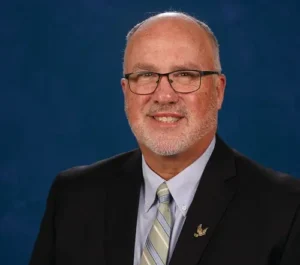
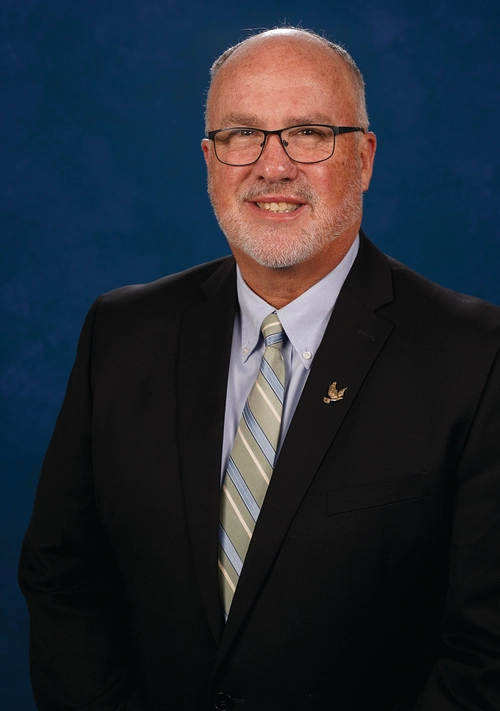
I’ve always wanted to raise my family in the New Hope community in North Coffee County, Alabama. My family ties to this community are strong.
My great-great-grandfather raised his family in this community from the mid-1800s through 1900. My great-grandfather raised his family in this community from the late 1800s through the 1960s. And, you guessed it, my granddaddy raised his family in the New Hope community from the early 1900s until 1994.
These grandparents are from my mother’s side of the family. My mother and dad started out raising their three sons in this community, but my dad’s love of the military and this country drew him and his family away from the community of our family’s heritage.
In the early days of my career, I was drawn away from my beloved community. But approximately 33 years ago, the Lord opened a door for me at South Alabama Electric Cooperative, so I could raise my family in the community like my grandparents. The other day, I met an individual on the road who absolutely confirmed I was at home. I was traveling home after work and met a man wearing a cowboy hat driving a pickup truck. When we passed each other, there was a very nice deer antler shed located on the driver’s side of his dash. At that moment, I knew I was at home. But truthfully, I’ve never doubted my home. I would doubt me driving my vehicle with a nice deer shed on my dash.
If you have read my articles, you know that I really enjoy deer hunting. Having a deer shed on my dash would make me a hypocrite. You see, I’m always talking with cooperative employees and my family about distracted driving. Heck, the other weekend I had to yell at my youngest grandson because he was driving the golf cart watching us instead of where he was going. Deer antlers on my dash would definitely distract me from driving.
Your cooperative does not want to be distracted. This month you should receive the 2026 Annual Report for the cooperative’s 2025 fiscal year. But I wish to give you some insight into the cooperative’s maintenance program for the coming year. The cooperative and trustees take reliability very seriously. We support that position with our right-of-way maintenance program.
The board-approved budget for 2026 includes fully trimming 16 substation circuits totaling 562 miles of distribution electric lines. Also in there is spraying treatment for 21 substation circuits totaling 1,075 miles of lines. This budget covers inspecting 4,705 power poles and replacing any damaged poles. Also, we have two full-time right-of-way crews on our system year-round, trimming dangerous trees and targeting right-of-way areas considered trouble spots. This program allows the cooperative to cover the entire system of power lines every four years.
The cost for the 2026 right-of-way program is over $2.6 million, but that’s still not enough because power outages are going to occur. The width of our distribution right of way is 30 feet. If you have an 85- or 100-foot tree set 50 feet away from that easement and that tree falls, that 30-foot easement is not enough room and it will damage the electrical power lines. The right-of-way program is not the only part of our overall maintenance, but it is probably the most impacted by storms.
As we move into milder weather and hopefully fewer storms, I pray our outage reliability improves. But my challenge to the employees of your cooperative is to always seek ways to improve our reliability. As Gen. George S. Patton stated, “Never tell people how to do things. Tell them what to do, and they will surprise you with their ingenuity.”
Are you thankful for your home? I sure hope so, because I remember when I lived in Germany for over four years and there was no place like home in the United States of America and the New Hope community in Coffee County. My grandparents all knew where their earthly home was, and they are resting there today.
Enjoy your home and your month.
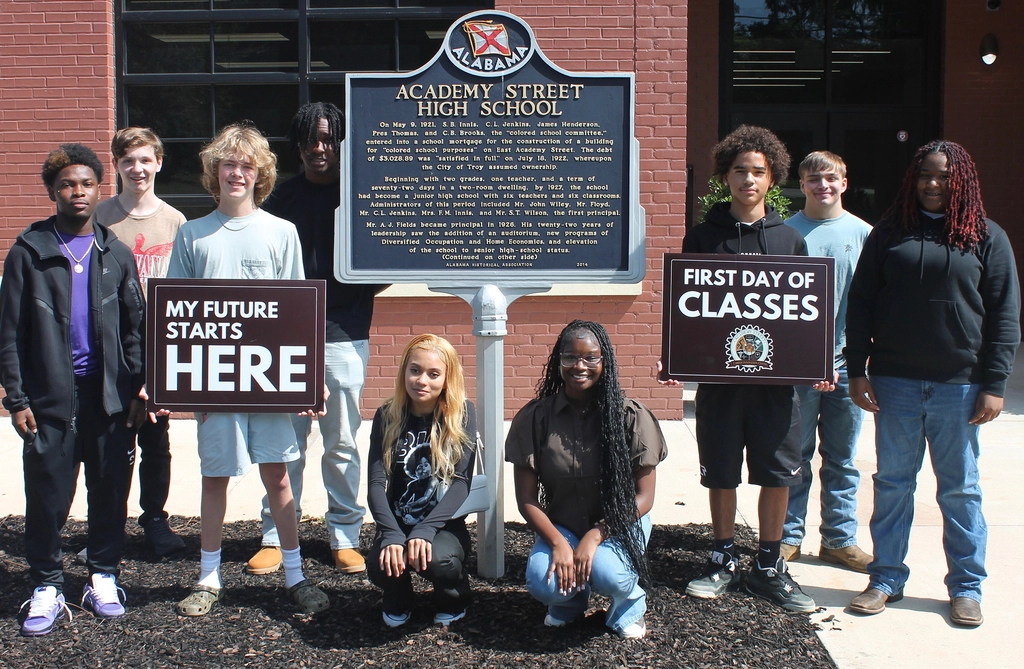
Historic school revived for career training
Haley Wilson’s interest in cybersecurity began after she learned computer coding. “I realized how many jobs you can get with cybersecurity,” the high school student from Goshen says. “I plan on going into the military, and I know that cybersecurity is a really big job in the military.”
Wilson is a computer science student at the Academy Street Career Innovation Center in Troy, which opened for its first year of classes in August.
Renovations transformed the historic Academy Street High School into a place where students learn mechatronics, aerospace engineering, computer science, public safety and linework.
Wilson is thrilled to learn more about the career she hopes to pursue.
“Now I will have some knowledge when I do go into the military,” Wilson says. “It’s a very great opportunity for a lot of students who want to go into certain things like cybersecurity, coding or whatever computer job they may want to go into.”
Historic partnership
The Academy Street school’s history dates back to the early 1920s.
The school, once known as Troy Junior High School, was renamed Academy Street High School in 1941, the same year its first senior class graduated. Fire destroyed the school in 1946, and the brick building now housing the innovation center was opened in 1948. The school graduated its final class in 1970.
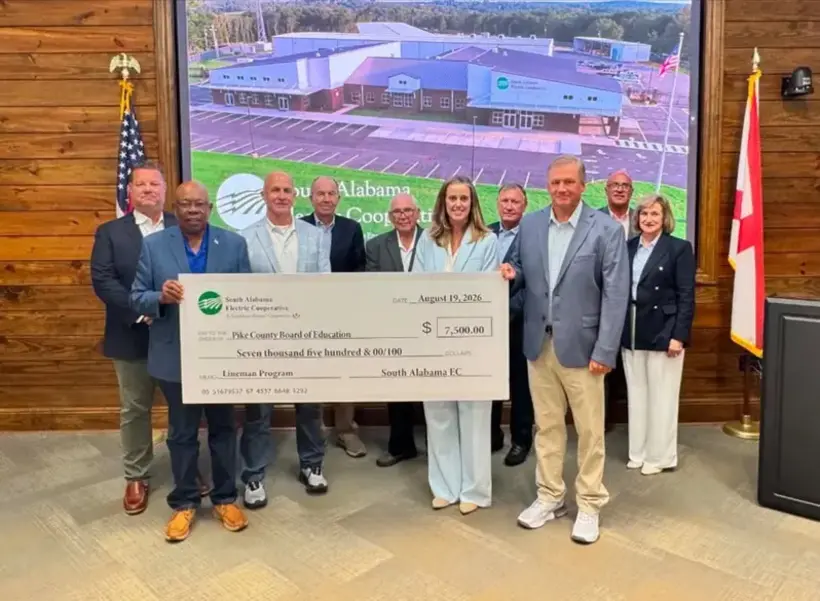
A grant allowed for the Academy Street Career Innovation Center — a $15.5 million project — to become reality. Local industries, including South Alabama Electric Cooperative, have contributed resources to the center to support the educational and work skills programs.
Academy Street Principal and Director Casey Moore says future plans involve a health science wing with simulators and a two-story culinary arts building. The culinary program will include catering and a working diner staffed by students learning about the restaurant and hospitality industries.
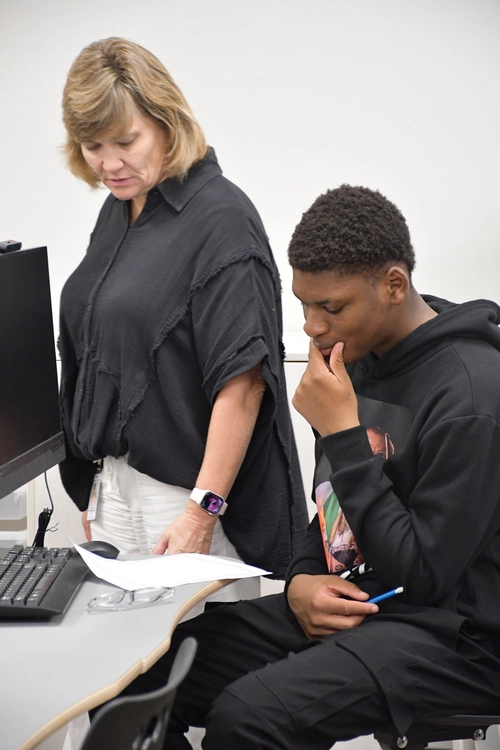
Academy Street’s partners include Troy City Schools, Pike County Schools and Dale County Schools, as well as the city of Troy and Enterprise State Community College. The city has a community liaison, Willie B. Williams Jr., working at the school, as well as a number of city departments with offices in the building and employees who work directly to teach students in areas like public safety and linework.
The innovation center is similar in concept to Pike County Schools’ Center for Advanced Academics and Accelerated Learning and the Troy-Pike Center for Technology. In fact, Pike County’s programs in mechatronics, aerospace and computer science have been moved to Academy Street, joining the new electrical lineworker and criminal justice programs.
“A lot of people are doing career tech, but we’re doing it a little bit differently,” Moore says. “I think being so connected to our community is what makes this really cool.”
Beyond hands-on learning
Along with the hands-on career skills students gain, they are also learning soft skills like communication and problem solving.
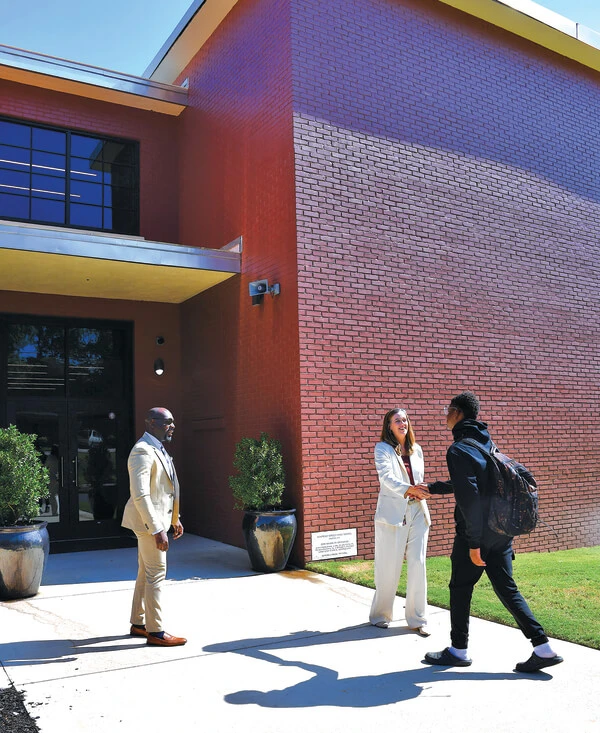
Students receive training to become ambassadors for the center, greeting visitors with a welcoming handshake. The lessons are reinforced at every bus drop-off when Moore and Williams greet arriving students. There are plans to have students tour local industries, as well as have speakers visit the center every Friday to help connect students to the community even more.
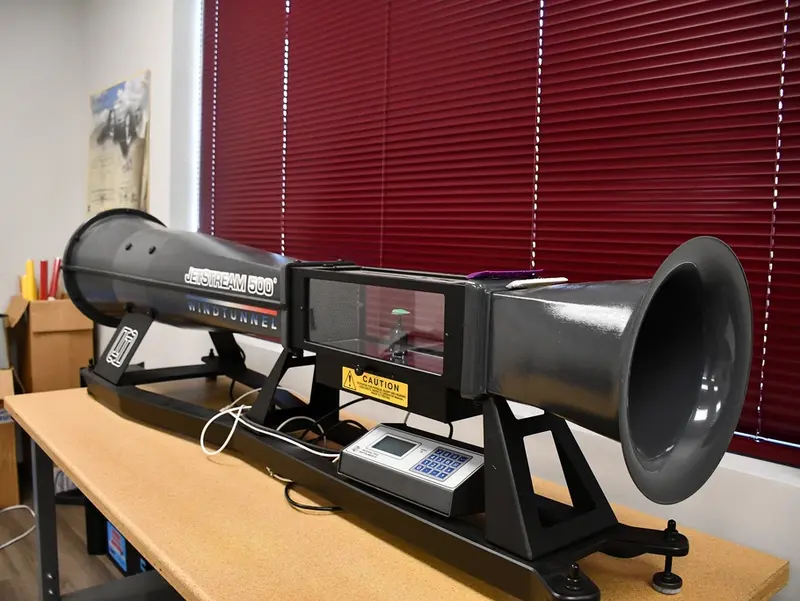
“We find in talking to these kids a lot of times they’re just not sure what their options are,” Moore says. “So, we’re going to take them out into the industry and let them see what the options are and let them see what life is like in those workforce fields.”
The center also provides financial literacy and interview skills. The goal, Moore says, is not only that students are employable but also grounded and successful in their daily lives.
“We want them to stay here and work and be successful and contribute back to the community,” Moore says.
But beyond helping students build career skills or find career paths, Academy Street is focused on what the community needs within its workforce, she says.
The center’s mechatronics program has received the most interest, Moore says. Mechatronics combines mechanical engineering, electronics and computer science to create automated systems.
“What we really try to do is focus on the needs of our community,” Moore says. “We know that a lot of our local industries and factories really focus on those mechatronics students. They need as many of them as we can produce. The city of Troy is one of our partners, and they’re saying they really need people coming out of these public safety programs, so we put in public safety programs. That’s driving what we do, the requests of our local industry.”
Back in July, I was blessed to celebrate the 250th anniversary of this great country, the United States of America, at the beautiful beaches at Panama City Beach, Florida. As always, the beaches were gorgeous, and the fireworks show was wonderful.
The fireworks show appeared to go on for miles up and down the beach, but I know it was not for miles. Regardless, the show was worthy of the milestone for the greatest country ever. The next day, I found myself back on the beach at sunset. As usual, God’s sunset was awesome.
As I faced westward toward the setting sun, a young boy caught my eye.
He looked to be around 5 or 6 years old. He did not have any toys, not even a sand bucket or a shovel. No siblings to play with. Mom and dad were sitting in their beach chairs, watching their boy and looking at their phones. This young boy stood at the edge of the water, hopping over waves as they receded into the Gulf of America. As he hopped over a wave, he excitedly entered the Gulf waters and then flopped down into the water. By then, the next wave was entering the shoreline, catching him square in the chest and rolling him backward toward the shoreline. The wave would just wipe him out. But with the same excitement he showed earlier, he sprang to his feet and hopped back up to the shoreline, only to repeat this activity again and again and again.
I watched him go through this process for approximately 45 minutes. The only toy he had was God’s beautiful creation and his joy in that creation. I began to think, “What if we carried the simple little game that young boy was playing into our personal and business life?”
Life is going to come at you in waves. Sometimes these waves are bigger than others, but all will knock us backward. Bigger waves will wipe us out harder, and it may take us longer to hop back to our feet and start over again. This even applies to your electric cooperative.
Throughout the summer, our linemen have to deal with extremely hot weather and afternoon thunderstorms that can cause a lot of outages. This time of year, they will get back to their feet, but it may not be with the same excitement the young boy showed. They do rise and wait for the next wave. The linemen’s excitement is knowing they have restored electrical service so members can return to their normal lives and the comfort electricity provides each of us.
We in the electric industry know there can be bigger waves of outages, but hopefully, I pray that we avoid the bigger waves for another year.
As we are closing another summer, your cooperative understands the difficult nature in paying the higher electric bills. As I have written over the past few months, the basic electricity rates at your cooperative have not increased in the past 11 years. The amount of electric power we use may have increased due to weather and by adding appliances or additional square footage to your home. Regardless of the event, a higher bill can be difficult to pay.
The cooperative, however, has tools to help you manage your electric use. So please call us about our app and our notification text on your daily electric usage. These tools will help you manage your usage, which will help you control your electric bill.
By the time this column is released, another football season will be here for our enjoyment. Each new season brings our excitement for another great season and, hopefully, a Natty (that means National Championship not a cold liquid refreshment in a can).
As the waves of life come crashing in on your chest and totally wipe you out, please know that Jesus Christ can be your savior. He can help us back to our feet and even carry us back into the waters of life. Just ask Him to save you.
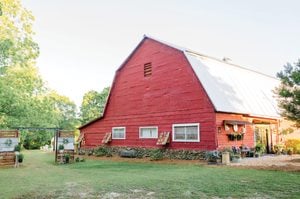
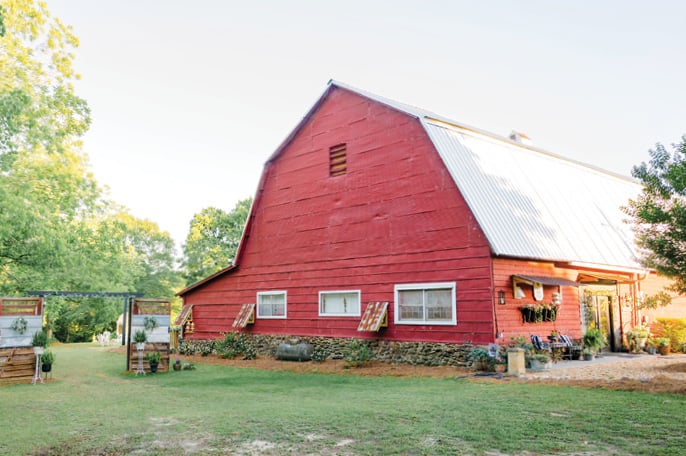
Restored iconic Lilly Rose Barn hosts weddings and community events
At Lilly Rose Barn, Tamsi Tucker keeps the cherished and unexpected gifts her family has received since renovating the historic landmark as a venue for weddings and community events.
A colorful handmade quilt called Grandmother’s Flower Garden hangs on a wall.
“Brenda Vinson told us it took her a year to make, and she felt like it was an honor to place it in our historic venue,” says Tucker, who lives in a century-old home nearby and owns the venue business.
Last fall, during an Alabama Barn Quilt Trail workshop in Troy, a group of participants knew exactly what they would paint for the towering red barn near Goshen.
“We were presented a stunning 8-foot-square floral lily rose quilt painting,” Tucker says. “We’re so touched by these projects to say the least.”
Tucker is grateful for the many ways the community has shown support — the quilts, reserving the barn, residents sharing with her the property’s history and comments written on the Lilly Rose Barn’s Facebook and Instagram pages.
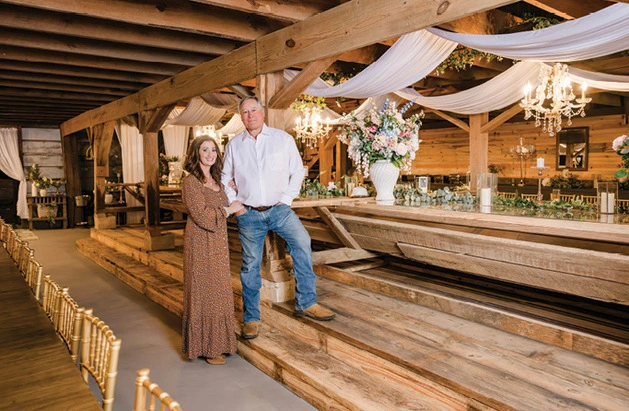

Celebration central
During the barn’s five-year restoration, Tucker envisioned it as a gathering place for residents to celebrate milestones and for organizations to hold special events.
“Since May 2025, we’ve been fully booked for two seasons,” Tucker says. “This is exactly what I had hoped and prayed for. We’re so grateful to be a part of this wonderful community.”
She and her staff have hosted weddings, showers, surprise engagements and a 50th wedding anniversary for her neighbors.
“We’ve also had the privilege to host the garden club’s ladies brunch and two proms,” she says.
To express her appreciation for such solid community support, Tucker donated the venue to the Junior League to sponsor the Spring Gala this past March.
“We hope to sponsor another local charity again next year,” she says.
Uncovering history
During the renovation, Tucker learned about the history of the 20-acre picturesque property.
“We were told the barn was built in 1893 and is one of the last and largest gambrel-type barns left standing in the area,” she says. “It’s listed on a historic registry.”
In 1916, the Parke Thompson family built the two-story house Tucker lives in.
“It’s been an honor to personally meet a few of their family members and hear them talk about their memories of the place,” she says.
The property eventually came into Tucker’s family in the mid-1990s. Her maternal uncle, Gene Sykes, married Bonnie Sue Holland, who lived there with her mother.
Bonnie was a caterer who wrote cookbooks, preserved flowers and hosted many events on the property.
“She grew the most beautiful lilies and roses all over the property,” Tucker says. “That’s what led me to the barn’s name — to honor her love of flowers.”
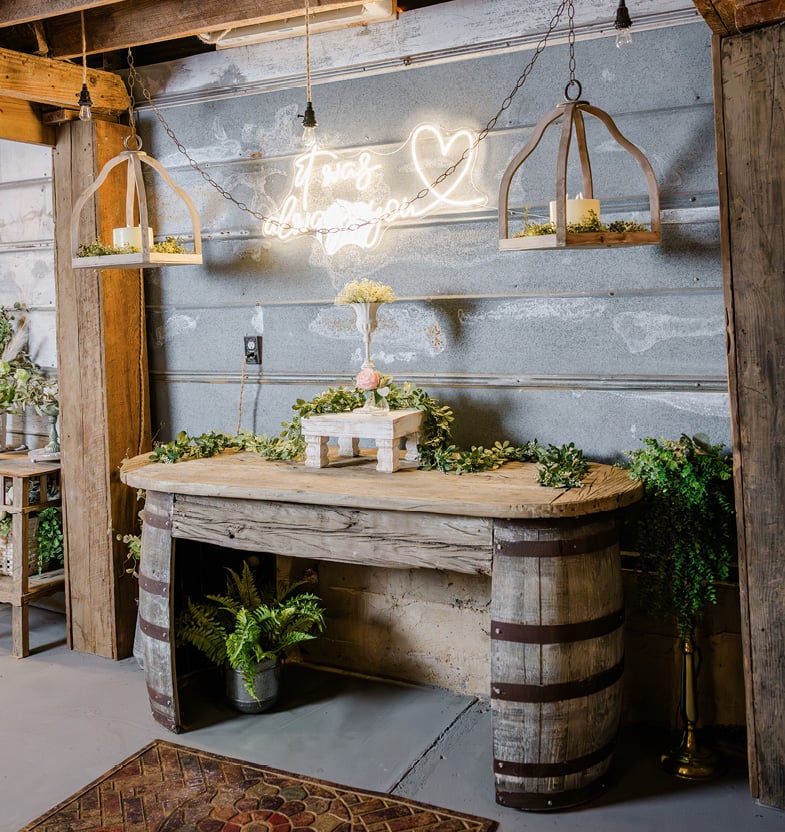
Restoration
After Holland and Sykes passed away in 2018 and 2019, respectively, the property was bequeathed to Tucker’s mother, Betty Quick, and sat vacant for about a year. At the time, Tucker was living in northern Florida and working as a sales rep for Patterson Dental. When she came through the area for business meetings, she often brought her mother.
“When we checked on the property, we always felt a sense of peace walking around there,” Tucker says. “We both agreed that the barn and house were a jewel in the community and needed to be saved.”
Tucker’s husband, Delwyn, agreed with them and spent hours helping restore the barn and home. Contractors helped retain many of the original characteristics of the structures during restoration.
“As the barn came to life, it was magical — like a piece of history resurfacing,” Tucker says. “I was told that Bonnie and her mother used to cater in what is now the bridal suite. For weddings, people walked through a tree-lined pathway to an altar. That spoke to me the most. I liked the idea of sharing the barn for a meaningful purpose.”
When renovations started in 2020, contractors focused on the bridal suite and the area that used to be animal stalls. The next additions were a large patio, a catering prep kitchen, a bathroom on the porch, a groom’s cottage and a bathhouse.
As work progressed, Tucker needed to be at the property and took a job as a sales territory manager for CAE Healthcare.
“We sold our Florida home in 2021 to fund the rest of the project,” she says.
During phase two, the second-story floor was removed. The third-story loft was rebuilt with a banister overlooking the lower story.
“Those two phases took four years,” Tucker says. “Our daughter wanted to get married here and be our first wedding. It took place in November 2024 and was beautiful and magical.”

For the barn’s next big event, the grand opening, Tucker hosted a bridal expo.
“I’ll never forget how the community came out and supported us that day,” she says. “I knew we had made the right decision and that our beautiful barn was here to stay.”
As more reservations came in, Tucker left her full-time career in 2025.
“Managing events at the barn is a full-time job that keeps me very, very busy. I’ve always loved flowers, too, and provide floristry service at the events. It’s my passion.”
By May 2025, the third phase was completed — a new roof, a cover over the patio, a dance floor, an outside saloon and a fourth bathroom.
“After five long years, our dream had come true. Our vision was to use the barn for a purpose, and it came to life,” Tucker says. “We would like this project to honor the memories of not only our dear relatives but the Parke Thompson family, too. We hope Lilly Rose Barn will be here another 100 years. Every day, I thank those who were here before me and the Lord above for giving us this opportunity.”
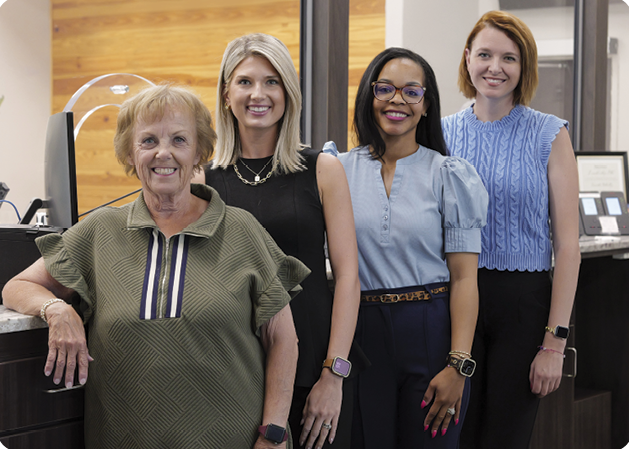
Paying at the drive-thru saves time.
Your time is valuable. The drive-thru window at South Alabama Electric Cooperative’s main office in Troy lets you take care of business with all the convenience of simply driving your vehicle up to a window. It’s just one of the easy ways you can pay your monthly bill.
There’s no need to get out in the sweltering heat or the pouring rain. Pay your bill from the comfort of your car.
Plus, you still get top-notch customer service from our member service representatives, from left, Deborah Carter, Cheyenne Wallace, Tanesha Whatley and Lea Jordan.
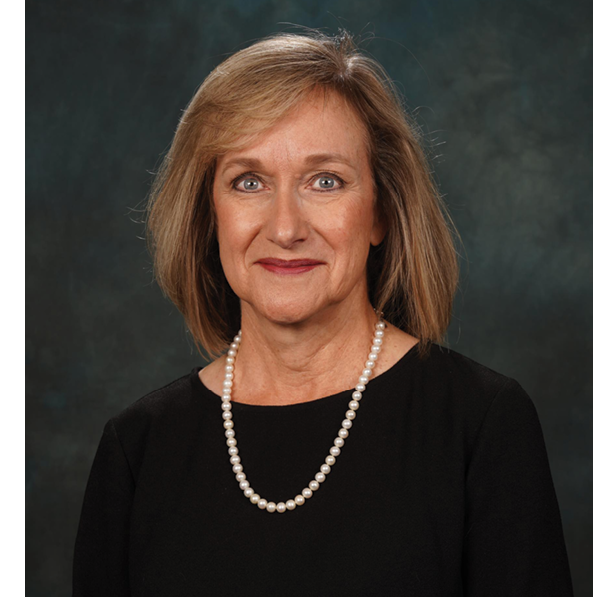
Janet Kervin grew up hearing stories of how electric cooperatives brought power to farms and homes.
The youngest of six children, Kervin’s father was a farmer and her mother was a homemaker and nurse. Her parents had her late in their life together — her father was born in 1911 and her mother in 1922. They knew firsthand how hard things were before electricity.
“Electricity was always revered in our household because of their life experiences without it,” Kervin says. “We were frugal with its use and were constantly reminded how life was without it.”
The newest member of the South Alabama Electric Cooperative’s Board of Trustees, Kervin says the Rural Electrification Act was the most life-changing improvement the U.S. government ever made for the daily lives of rural citizens.
“Without the electric cooperatives it created, we are unable to have industries and businesses that create jobs, which produce tax revenues that pay for protection, healthcare, schools and the most basic necessities,” she says. “Our lives are comfortable and enriched because of the enjoyment of electricity. The member ownership of the cooperatives is a good business model to ensure longevity of a healthy cooperative that can meet the growing needs of our communities.”
Kervin grew up in Henry County between Headland and Abbeville, graduating from Abbeville Christian Academy.
She then attended Troy University, earning her master’s in business administration while working as a graduate assistant in Troy’s Sorrell College of Business. Her first full-time job as administrative assistant for the college’s dean involved helping international students meet admission requirements for the MBA program.
Later, Kervin worked as a counselor for Troy’s business college, providing counseling and training for new and existing business owners in areas like business planning, understanding lending, marketing and government contracting. Her work was part of a network of university-based Small Business Development Centers in Alabama and throughout the U.S. She retired after 25 years.
Kervin also did contracted research, including economic impact studies, image analyses and public opinion polls for political candidates, universities, hospitals and businesses.
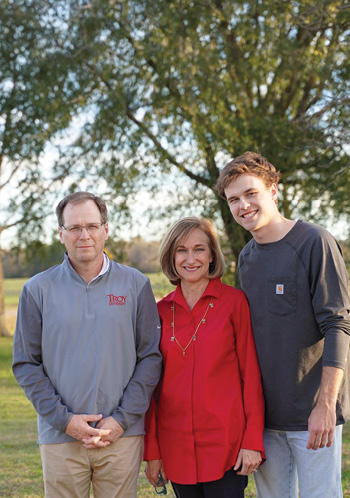
Kervin and her husband, Jeff, have been married for 32 years. They have a son, Joel. She serves as secretary for Oak Grove Methodist Church. When she has spare time, her interests focus on family and friends.
“I enjoy daily Bible study, having meals with my family and friends, reading good books, crocheting, trying to play golf and walking our dogs, Teddy and Pepper,” she says.
Filling the District 5 SAEC board seat once held by her father-in-law is an honor, she says.
Delaney Kervin was headmaster at Pike Liberal Arts School for nearly 30 years and served on the SAEC board for more than three decades. He loved both roles and took them seriously, she says.
“I pray I can make Mr. Kervin proud of how I represent District 5,” she says. “I am committed to serving all the members of SAEC and supporting what is in the best interest of the cooperative’s members.”


There were some key moments during the 2026 Youth Tour in Washington, D.C., that left lasting impressions on Hayden Duncan and Sarah Sanders.
They both loved the beauty and history of Mount Vernon, the historic home of George Washington. They found the United States Holocaust Memorial Museum moving and educational. The two say the trip taught them more than they expected to learn.
“What goes on behind the scenes that we really don’t get to see other than on the news,” Duncan says.
Sanders, 16, and Duncan, 17, represented South Alabama Electric Cooperative during the Washington Youth Tour, visiting the nation’s capital with 1,700 delegates from 44 states. Sanders is a student at Pike Liberal Arts School, while Duncan attends Zion Chapel High School.
Both delegates say they would recommend Youth Tour to anyone considering it.
The Washington Youth Tour is an annual event sponsored by the National Rural Electric Cooperative Association. Cooperatives from around the country send delegates to the nation’s capital to learn about the country’s history, government and how cooperatives play a role.
“The experience, I honestly just think, has given me so much more confidence, getting out there and meeting new people,” Sanders says.
The trip included visits to popular memorials and monuments including the Jefferson Memorial, the U.S. Capitol and the World War II Memorial. The students spent a day at the Smithsonian Institution. They clowned around in a replica of the Oval Office at the People’s House, a White House history museum. They listened as Alabama Sen. Katie Britt described her desire to serve and how she balances her family life with elected office.
And they feel like they made connections, meeting peers from all over the country and making new friends along the way.

Both Sanders and Duncan want to study law and maybe one day become lobbyists. Sanders became interested after observing election coverage, but she didn’t know how attainable the goal was. Duncan says the Youth Tour is responsible for her interest in that area. It just so happened that one of their Alabama chaperones is a lobbyist for the Alabama Rural Electric Association.
“That was super cool to be able to talk to her about her experiences and how she got to where she was,” Sanders says. “It has made me more confident in my path, continuing to college and everything.”
Duncan says the Washington trip inspired her.
“It definitely made me feel like this might be something I want to do and make a difference on my own,” she says. “I definitely would love to go into the law, maybe be a lawyer or something like that. This is a whole new door, and there’s so many different things you can do with this.”
There were 61 delegates from Alabama, and Sanders and Duncan say they all grew really close in the short timeframe of the trip.
While the arrival of state delegates is staggered during the week, all the states were represented during a party held for delegates.
“We were meeting people from all over the country, which isn’t something that you get to do every day,” Sanders says.
When August rolls around, the spring gardening bug gives way to the sweltering heat in Alabama, and our gardens start to play out until cooler times arrive.
Sadly for my grandsons, school will be starting back. The upside to that is football will be coming soon. We actually referred to those practices as 2-a-days with only one water break — that’s one water break per practice. Football in August is a young person’s game.
September can be as hot as August, but hopefully cooler times will be arriving soon.
I would like to discuss electric bills — not only for summer months but all year. Electric bills are driven by weather. After reading that comment, I bet you are thinking, “Duh! Who is this guy?” Let me explain.
Managing your electric bill is not like it was 20 years ago. We had no devices back then. All of our equipment is linked to give you information either through our website or mobile app. We even have the tools in-house to help you track your daily use and calculate the average daily use on your bill. This is on all your accounts, not just one. This tool gives you ownership of the decisions you make regarding electricity use.
Remember the garden statement at the beginning of this column? Say you plant this huge garden and have a bountiful harvest, so you and your wife go out and buy two large chest freezers for the garage. If you survive planting this huge garden with your wife, you will be able to enjoy the harvest later, but you will also use more electricity. With SAEC’s digital tools, you can track your electric use increase from the additional appliances.
Likewise, if you come in from the garden hot and sweaty and adjust your thermostat to cool off, our tools will show you how that action affects your power use and your bill.
Too many times members tell our member service representatives, “There is no way that I use that much electricity.” I like to call that “electricity sticker shock.” Our electricity is metered by an electronic device that shows the energy use by the member. The meter equipment failure rate is very low. Now, there are some other issues that can occur on the member side of the meter, but that’s not my focus today.
Sometimes high electric bill complaints are aired on Facebook, stating the electric company keeps increasing our electric rates, and people will jump on that bandwagon. We do not have a lot of that from our members. I cannot speak for other utilities, but at your cooperative, the last rate adjustment was in 2015. In 2026, SAEC changed its power cost adjustment by $5 per 1,000 kilowatt-hours. The average member uses approximately 1,200 kWh per month. On the average member’s bill, this change is $6 per month, so that’s not going to be the cause of your high utility bill.
Have you ever heard someone say, “I’m just not a numbers person?” It is a totally misleading statement. We all do numbers in some form. If you don’t do numbers, you will not function in this world. That’s why they teach math in school. But please do not let the numbers fear stop you. Our team members will walk you through the numbers process.
How has your cooperative provided its members stable rates over the past 11 years? It is through what I call organic growth. That means our base membership — both residential and large commercial accounts — is using more electricity. Growth in our overall membership helps, too. Now, we have all experienced high cost increases over the past five to six years, but not in your cooperative’s electricity rates.
I would like to tip my hat to the board of trustees for South Alabama for their insights into our budgeting process and allowing the cooperative management team to control the costs that make up your rates each year.
My commitment to you is always to seek out ways to improve our reliability and control costs so electricity rates can remain stable. Overall, we need to do those functions in a very safe manner for our employees and our members. Please contact our member service representatives on how you can monitor your electric usage and avoid the electric sticker shock.
Until next month, stay cool.
This Fourth of July, our country’s Great Experiment will be 250 years old.
The Declaration of Independence was accepted and signed by a group of men we call Founding Fathers. These men knew the cost of signing this document and risked their lives, reputations, wealth and families’ safety.
The statement in the Declaration that sets the standard for this experiment is as follows:
“We hold these truths to be self-evident, that all men are created equal, that they are endowed by their Creator with certain unalienable Rights, that among these are Life, Liberty and the pursuit of Happiness.”
Samuel Adams was one of the men who signed the Declaration. Sadly, Adams is probably better known today for beer even though he was involved in organizing resistance to the British rule in Boston. Adams helped create the Sons of Liberty, a political organization active in the 13 American colonies. Secret meetings were held in the basement of the Green Dragon Tavern, which became known by historians as the headquarters of the Revolution. The Boston Tea Party was planned at this tavern. Adams and friends probably drank beer and ale while planning the Boston Tea Party, but he was not a brewmaster.
The British viewed him as one of the most dangerous revolutionaries in America. He could have been arrested or executed for treason. Knowing that possible outcome, I would have had a beer or two myself if I had been in there planning the Boston Tea Party. But the individuals at that time understood the necessary sacrifices.
During World War II, the people of the United States understood sacrifice because they knew their freedom could be lost. Today, you hear complaints about temporarily high gas prices due to trying to remove nuclear threats from a country that will use them against anyone who opposes them without discernment.
I believe God has blessed our country — not because our Declaration of Independence and Constitution are perfect documents, but because they provide hope that some of these imperfections could be worked out, giving its citizens life, liberty and the pursuit of happiness.
Understanding the threats to the Great Experiment throughout our country’s history
will help you see why I believe God has blessed this country.
In the early days of the Revolutionary War, our commander, Gen. George Washington, was defeated in the battle of Brooklyn. Washington and 9,000 Continental troops had their backs up against the East River, and Washington ordered a nighttime evacuation with the British army only 600 yards away. At daybreak, thousands of troops were still waiting to cross, including Washington. Remarkably, a thick fog settled over Brooklyn and the East River, allowing the army to safely cross the river with supplies. If Washington and his army had been captured, he would have been killed. With no army and no supplies, the experiment would have been gone with the wind. The signers of the Declaration of Independence would have met the same fate as Washington.
On Dec. 7, 1941, Japan attacked the Hawaiian Islands. With the Pacific naval fleet crippled, Japan had open access to the West Coast of the United States. Such an invasion would have given them a strong foothold in our country. With our limited military at that time, turning them away would have been almost impossible. But, strangely, Japan not only turned away from the West Coast, they even turned away from the Hawaiian Islands.
With these two events, and there are more, is the United States just lucky? I don’t think so. I believe God has not only blessed this country but protected it as well.
After 9/11, President George W. Bush asked American musician and singer Michael W. Smith to write a song about the country. The song he wrote was “There She Stands.” It is about the American flag, the ultimate symbol of this Great Experiment. Here are some of the song’s lyrics:
“When the night seems to say/ All hope is lost, gone away/ But I know I’m not alone/ By the light she stands/ There she waves, faithful friend/ Shimmering stars, westward wind/ Show the way, carry me/ To the place she stands/ Just when you think it might be over/ Just when you think the fight is gone/ Someone will risk his life to raise her/ There she stands.”
God bless the USA until the Creator returns. Happy Fourth of July.

Manufactured homes are an affordable way to home ownership for many people.
But while modern manufactured homes may include energy-efficient features, older models may not, adding to your monthly costs to heat and cool your home.
South Alabama Electric Cooperative offers rebates to upgrade manufactured homes to energy-efficient heat pumps. SAEC members may qualify for rebates up to $400 per ton to convert their manufactured home to a heat pump system.
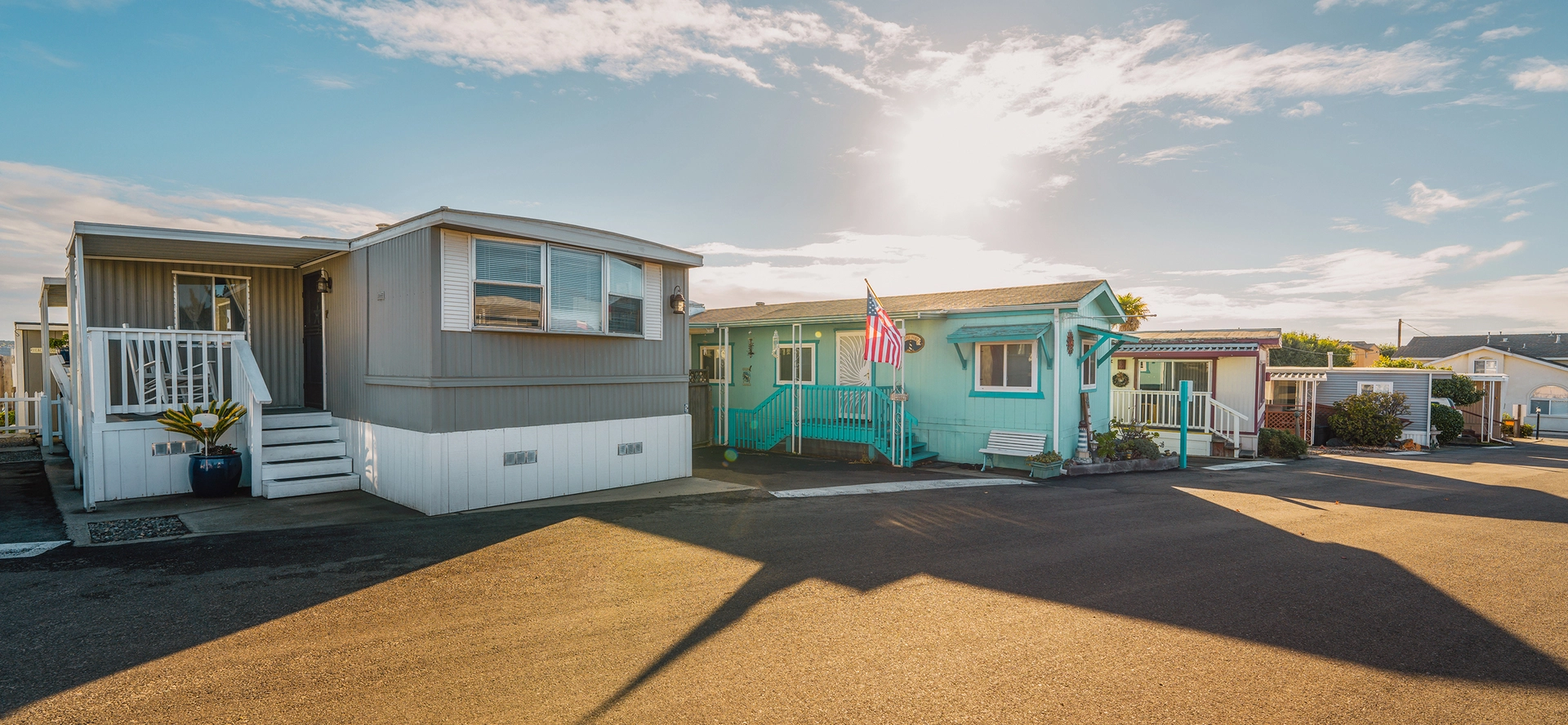
Older manufactured homes were often equipped with electric furnaces. SAEC’s rebate is designed to help cover the higher upfront costs to purchase a heat pump, which can be up to four times more efficient to operate than an electric furnace. And despite the name, heat pumps are efficient at both heating and cooling. Heat pumps work by moving heat from your inside home to the outdoors when set to cool and do the opposite when heating. Since heat pumps don’t generate heat, they are more efficient to run, according to the U.S. Department of Energy.
Members can save hundreds of dollars a year by upgrading to a heat pump.
The rebate is made possible with financial support from PowerSouth Energy Cooperative, says Andy Kimbro, vice president of member services for SAEC. As SAEC’s wholesale energy provider, PowerSouth has to provide enough capacity to meet the power demand among its co-op members. Rebates that improve operational efficiency even at a household level create cost savings for PowerSouth, SAEC and members.
For more information on the manufactured home rebate, contact SAEC’s member services team at 800-556-2060.
Kimbro says whatever heating and cooling system you currently have, it’s important to keep it maintained. Heating and cooling systems can account for roughly 50% of your monthly power bill.
Kimbro recommends having your system serviced once a year and changing the filter monthly to ensure it runs as efficiently as possible.