
Font Size:



At South Alabama Electric Cooperative, we know that supporting our community takes more than providing affordable and reliable electric service each day. It also means helping our young people become strong leaders for tomorrow.
One way we do that is by providing scholarships to deserving high school seniors. For over 20 years, we have awarded $1,000 Electric Foundation scholarships to local students planning to attend an accredited 4-year college, junior college, technical school or vocational school. We’re proud to continue that tradition in 2022.
Any high school senior who is a dependent of an SAEC member at the time their application is submitted and through to their graduation is encouraged to apply. Just visit our scholarships page to download an application today.
All applications and attachments must be completed and signed, and submitted to:
Electric Cooperative Foundation
P.O. Box 244014
Montgomery, AL 36124
Applications must be signed by both the student applying for the scholarship and the parent or guardian of the applicant. Completed applications must be received at the ECF office no later than Feb. 18.
The Electric Cooperative Foundation was established in 1997 as a way for Alabama electric cooperatives to give back to their communities. Since then, the foundation has awarded more than $1 million in scholarships to students throughout the state.
This year, the foundation will award scholarships to students in each of the 21 districts established by the ECF’s board of directors. While the board may ask SAEC to offer input on the applications it receives, the final decision for all scholarship recipients lies with the foundation’s board.

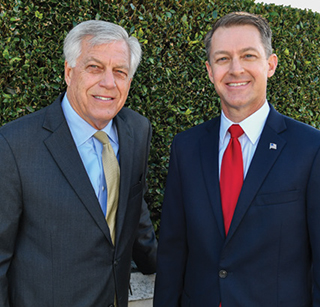 Wes Allen’s earliest political memories aren’t of his own career but his dad’s. His father, Gerald Allen, first won a seat in the Alabama House of Representatives in 1994 before later taking a seat in the Alabama Senate in 2010. Wes remembers the family lining up beside him in support.
“When he got into politics in the ’90s, we were there as a family to help him get elected,” Wes remembers. “We were an active part of campaigning for him and supporting him and what he stood for.”
Years later, watching his father’s political career inspired Wes to serve as probate judge for Pike County from 2009 until his own run for office as representative for District 89 in the House. By that point, Gerald had made his move to the Senate, making the Allens the first father-son duo in Alabama history to serve alongside each other in the state legislature.
“He’s a wealth of knowledge. He’s someone that I can go to and ask for advice on who I should talk to about certain issues,” Wes says.
Now, in the last year of his term as a state representative, Wes is hitting the road to campaign for Alabama’s secretary of state. And this time, it’s his father’s turn to line up beside him. Not that Gerald is the least bit surprised.
“Watching him grow up, he always gained the respect of his peers by working hard, being honest and fulfilling his commitments,” Gerald says. “That’s just the way he is. So it hasn’t surprised me at all to see what’s developed with him.”
While his role in the House has been a new one for Wes, growing up in a political family meant he knew what he was getting into. His time as a legislative liaison for the Probate Judges Association gave him experience with the legislature, but it was watching his dad that showed him what the job really meant.
“It’s still a job about the people, even though the state representative role is a little different from being a probate judge,” Wes says. “It’s still about being responsive, solving problems and making their communities better. Just being around Dad, I knew how the whole process worked. Nobody works harder than Dad for his district.”
In that time working for his district, Gerald says he’s most proud of legislation that paved the way for the Mercedes Benz MBUSI plant in Tuscaloosa County in 1995, a voter ID law passed in 2011 and an amendment to the state constitution banning the use of “foreign law” in Alabama courts.
While Wes may not always vote the same way as his dad, he considers himself to be in the same conservative vein. As a result, they had a close working relationship between their different houses of the state legislature.
“We share a lot when we’re in Montgomery,” Gerald says. “To me it is certainly a benefit to be able to hear from someone you trust and believe in.”
Over his last few years in the legislature, Wes’ focus has been on removing state regulations for Alabama business owners. For each of his last three sessions in the House, he has brought forward a bill that would give the legislature oversight of new regulations suggested by state agencies. The bill has yet to pass, but he hopes the fourth time will be the charm in 2022.
“When you take on bureaucracies, sometimes that type of legislation is hard to move,” he says. “But we feel like we have a lot of stakeholders on board and some momentum this year to get it right.”
With three years of his term in the House now under his belt, Wes is turning his eyes to secretary of state. If elected, he hopes to draw on his years of experience as a probate judge to make sure state election officials have the support they need.
“The secretary of state is the chief election official for the state, and I have the experience to administer election law,” he says. “I’ve worked with probate judges, circuit clerks, sheriffs, poll workers and the Board of Registrars. Those are the folks that really get it done, and we’ll be there to support them.”
Rather than making any changes to Alabama’s election system, Wes sees maintaining the status quo as the priority.
“Alabama has an excellent election process, and we need to protect it,” he says. “We need to make sure that we don’t give in and weaken our election law by doing some of the things that we’ve seen done around the country.”
That includes prohibiting mail-in voting, eliminating ballot collection and not allowing more than a single night to determine election results. “We do a very good job in Alabama, because at the end of the night you’re going to know who wins and loses,” he says. “You’re not going to have to wait weeks.”
When Gerald first ran for office in 1994, he was inspired by his own father’s service as a four-term county commissioner. Now, as he supports Wes’ campaign more than 20 years later, he’s proud that he was able to provide the same example for his son.
“It’s an honor as his father to support him in any way that I possibly can,” Gerald says. “It makes his mother and myself very proud that he’s continued the same type of path that he had as a youngster.”
If there’s one thing Gerald has learned from his decades in office, it’s that family support is crucial for any politician. Whether they’re getting behind a microphone or not, a run for public office puts everyone in the spotlight.
“It’s a commitment from the entire family when a candidate makes a decision to put them before the public,” he says. “It requires every family member and relative to educate themselves and work to do what needs to be done.”
Even more important than that support, Gerald says, is the willingness of political candidates to put their families first. For the Allens, that has meant occasionally talking shop at family gatherings while attempting to separate politics from their personal lives.
“I think it is critically important that candidates are mindful that their first responsibility is to their family,” Gerald says. “You have to make sure they’re taken care of and they aren’t put in circumstances that may be harmful to the family unit.”
As he mounts his campaign for secretary of state, Wes will draw on his own experiences as a judge and in the House. But he will also be looking to his father’s example of how to help the people closest to him and those he represents.
“At the end of the day, it’s about service and making the state better,” he says. “It comes down to people, and I have no better example than how my dad lives his life, operates and treats people. To have his support means the world.”

 One of the biggest ways being a cooperative member is different from being a customer of any other utility is that SAEC gives our profits back to you.
At the end of each year, South Alabama Electric Cooperative subtracts our expenses from total revenue and sets aside whatever is left over to be returned to members as capital credits. This month, SAEC will return $1.3 million to our members.
As a part of a member-owned cooperative, each member receives a portion of those capital credits based on how much business they have done with SAEC in the last year. The credits serve as a reflection of each member’s ownership of the cooperative.
Because SAEC still needs some amount of revenue to continue expanding our electric system and improving service each year, the credits members will receive throughout the month of December are not all from the last year. SAEC uses a hybrid system, meaning about a third of those credits will be returned from 2017, while the rest will be returned from previous years.
Including this year’s credits, SAEC has retired more than $16 million in capital credits. We’re proud to be able to give back to our members as a way of recognizing everything you have given us.
Sometimes, capital credits may go unclaimed when a member passes away or moves without updating their address. Those credits can still be claimed by the member or an immediate family member. View a full list of all unclaimed capital credits. If you or a family member are on the list, you can fill out a form to claim those capital credits.

 SAEC’s new drive-thru allows members to make payments without braving the elements.
Need to make a payment outside of business hours? The payment kiosk in our redesigned lobby has you covered.
Visit our new office today to pay how you want, when you want.

 Whenever Jimmy Copeland was asked what drove him to serve his community, the answer was simple enough. Whether it was as part of the Pike County Commission, as a member of the Troy National Guard or as special project director for Troy Cable, he wanted to build a community his family could grow in for generations to come.
“He and [Troy Cable General Manager] Dick Freeman would say they were able to grow up here and make a living here,” says his son and Troy Cable Construction Manager Chad Copeland. “Their goal was to create a community where their kids could grow up and raise their grandkids here as well.”
By the time Jimmy Copeland passed away in July at the age of 69, he had accomplished that much and more. He was elected to represent District 2 on the Pike County Commission in 1989 and served there until his term was interrupted in September 1990, when he was deployed with the National Guard to Operation Desert Storm.
“He was very proud of the fact that he was able to bring everyone on his team back from Iraq,” says Troy Cable Chairman Vicki McPherson. “He was just the kind of person you want on your team. Someone you know you can depend on and could always trust.”
In 2003, Jimmy Copeland joined Troy Cable and worked in a governmental affairs role for nearly 20 years. It was a job well-suited to someone who never met a stranger and always took an interest in the lives of everyone around him.
“He was special projects director and he was special to everybody,” says McPherson. “He always offered encouragement and motivation. He was a true friend to each and every one of our employees.”
While Jimmy and Chad Copeland worked very different jobs for Troy Cable, their roles often brought them together. One of those projects, a 2010 partnership with South Alabama Electric Cooperative, proved to be transformative for both the company and the region. Together, they helped bring fiber internet service to the cooperative’s substations, laying the groundwork to tremendously expand residential fiber access throughout south Alabama.
“From my perspective I thought they were crazy because we were a small company and that was an extremely big project,” says Chad Copeland. “That model has now been used in a lot of places to further rural broadband. But I can’t stress how forward-thinking they were in what they did on that project.”
Jimmy Copeland led the charge when it came to convincing local leaders that the benefits of fiber service in their communities would far outweigh the short-term work of getting it there. McPherson says she, Copeland and Freeman didn’t worry about the challenges in the moment.
“It was a huge project, but we just didn’t know we couldn’t do something like that,” she says. “We set our mind to getting it done and were dedicated to doing that.”
In the end, Troy Cable finished the project ahead of time and under budget, allowing them to build almost 100 more miles of cable than originally planned. That infrastructure set the stage for the company’s growth and eventual acquisition in October by Mississippi-based telecommunications company C Spire.
“It happened at a time when Troy Cable was still growing and it was a major expansion for us,” says Troy Cable CEO Jake Cowen. “Beyond the surrounding areas it opened the door to build service to Montgomery and Dothan and really expanded our network in a big way.”
While that partnership proved to be a crucial turning point for Troy Cable, it has also had a lasting impact in Pike County and beyond. Now a county commissioner himself, Chad Copeland credits the arrival of major manufacturers like Rex Lumber and Universal Precast to the availability of high-speed internet.
“If those companies had found out they couldn’t go where they wanted and get broadband access, or had to pay another $250,000 to get fiber access there, that’s a deal killer,” he says. “With that fiber expansion, SAEC and Troy Cable together opened up south Alabama’s footprint to a lot of economic development and growth that wouldn’t have been there without it.”
In that way, the fiber project helped Jimmy Copeland achieve his goal of making Pike County a better place for his kids and grandkids to live their lives. He even got the chance to watch as one of those grandkids, Max Copeland, went on to participate in the SAEC Youth Tour in 2018. There Max was chosen to represent Alabama at the National Rural Electric Cooperative Association’s annual meeting.
“When I think about Jimmy I think of that Aaron Tippin song ‘You’ve Got To Stand For Something,’” says McPherson. “He stood for what he believed in and he didn’t back down from it. We miss him every day and we’re so proud of the influence he’s had on Troy Cable and everyone here.”

 While space heaters are often put to work in rooms that don’t receive as much heat as others, the Consumer Product Safety Commission estimates that they cause approximately 25,000 fires a year and about 300 deaths.
At South Alabama Electric Cooperative, we want to ensure our members stay safe this winter. If you use a space heater in your home or at your business, please keep these important tips in mind to stay safe and warm:

 Max Copeland tells people that the version of himself who went into the South Alabama Electric Cooperative and National Rural Electric Cooperative Youth Tours is not the same person who came out of them. He entered the program as a high school junior who didn’t know much about the world outside his own bubble and left with a whole new perspective.
“There’s still a lot I don’t know. But going through the Youth Tour at such a malleable age really shaped me,” he says. “For rural kids, you can think the town you’re from is all there is. The Youth Tour opens your eyes to a larger world that really is out there.”
The experience opened doors for Copeland. Not only did he attend the Montgomery and Washington, D.C., Youth Tours, but he spoke at SAEC’s 2018 annual meeting and was even chosen to represent Alabama at the National Rural Electric Cooperative Association’s annual meeting.
Three years later, Copeland is now studying political science at Troy University. But he still chalks his success up to the lessons he learned on those Youth Tour trips.
“It taught me a lot about engaging with others and learning about people, which is so important in any field,” Copeland says. “It can be easy to get caught in your own echo chamber. Getting out and being able to meet other people who might not think the same, look the same or act the same was great because it opened my eyes to a world of difference, which you don’t always get locally.”
Copeland has spoken to students who, like him, weren’t sure what to expect from the Youth Tour. He tells them what he wishes he’d known then: The experience can have a profound impact on their future.
“I know there’s a lot of kids out there who think it’s just another reason to miss school. But it’s important to understand how great an opportunity it truly is,” Copeland says. “It will change you positively more than anything else you can be a part of. It will open doors that you could never open yourself.”
The Youth Tour was Makayla Burgess’ first opportunity to fly on a plane and take a trip out of her home state. The experience unlocked new possibilities for her future, but it also gave her a greater interest in the past.
“I had never been into history lessons. It wasn’t my favorite subject,” she says. “But ever since the Youth Tour I really got into history. Last semester, I even took a history class that I didn’t need. I just wanted to gain more knowledge about history because that is what interested me.”
Burgess especially enjoyed learning about local civil rights history on the Montgomery Youth Tour. Later, when visiting the nation’s capital, she had the chance to learn more about how that local history fit into the larger national movement.
Just as importantly, the Youth Tour helped Burgess come out of her shell and gain confidence while talking to new people. It’s a skill she expects will be especially important as she pursues a career in nursing.
"Crenshaw County is very small. I used to not talk to more than five people,” Burgess says. “The Youth Tour really helped me open up. I’m not afraid to talk to people I don’t know. I really need that in the nursing field, where you’re going to have to see and talk to all kinds of people.”
When her high school guidance counselor asked her to return to talk to the junior class about the Youth Tour, she didn’t hesitate. “I try to encourage anybody I talk to to apply,” she says. “It’s just a really great experience to go.”
Not everyone who participates in the Youth Tour will take an interest in government or history, but Megan Starling still sees it as an invaluable experience. As a sophomore at Auburn University, studying wildlife sciences with the intent to pursue a career in veterinary medicine, she sees the program aimed as much at personal growth as professional growth.
“It still excites me that I got to do it,” she says. “But the beauty of it was that they wanted to translate what we were seeing and experiencing into real life for us. Whether that meant we wanted to be part of the government in some way in the future or not.”
Just weeks after returning from D.C., Starling lost her older sister in a boating accident. During such a difficult time, the people she recently met through the program suddenly became a much-needed support network.
“I just remember so many people reached out to me and were willing to pray for me,” she says. “For them to stay in touch and be there for me during such a hard time, even though we’d only known each other for a little while, I think that’s a testament to the people who were part of the trip and how it shapes you.”
The experience also opened Starling’s eyes to the important role larger support networks play, whether it’s the government, a cooperative or her own university.
“I think what it taught me the most was that there are always resources available no matter what help you need,” she says. “Just like I’m now aware of the inner workings of the government that are there to help citizens, my passion in undergrad has been to make sure I’m aware of students’ needs and the resources available so I can help them, directly or indirectly.”
Each year, South Alabama Electric Cooperative selects 10 juniors from high schools in the cooperative’s service area to attend the Alabama Electric Cooperative Youth Tour in Montgomery. These students get an all-expenses-paid trip to the state capital, where they visit historic sites and meet other students from across the state.
2 of those students will also be selected to attend the National Rural Electric Cooperative Youth Tour in Washington, D.C.
If you want to attend this once-in-a-lifetime trip, here’s how to apply:
The Montgomery Youth Tour will be March 15 to March 17. A panel will review all applications and conduct interviews in January to select the winners.
Good luck!

 Many members think the key to keeping their electric bill consistent is leaving their thermostat at the same temperature all year. Unfortunately, even if the temperature in your home remains unchanged, your heating system has to work harder to maintain it during colder months.
But keeping your electric bill under control during the fall and winter months doesn’t have to be complicated. Try a few of these simple steps around your home to see how much of a difference it can make on your monthly electric bill.
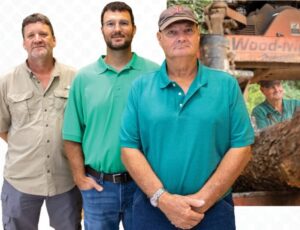
 When cooperative leaders set out in 1965 to construct a new building for South Alabama Electric Cooperative, they were thinking about more than just the work being done at the time. They were also building a home for the cooperative and its members for decades to come.
It was a job well done. That building served the cooperative and its people for more than 55 years, through periods of tremendous growth and transformation in the electric industry.
Today, SAEC has a brand-new home. And like the last one, it was built with our community in mind. We now have the space needed to better serve a system that continues to grow. We have implemented new features that members have long requested such as new drive-thru windows. There is even a designated community room to host local events.
All of that is possible thanks to the hard work of local builders who made all of our dreams for this new headquarters a reality. From the materials used on its walls to ensuring construction costs would not be passed on to members, SAEC’s new home was truly built by and for the people of South Alabama.
As soon as preparations for the new building started, it became clear many trees on the existing site would need to be cut down to make space. But rather than dispose of them, SAEC saw an opportunity to use those same trees in the construction.
“This land belongs to the members, so we didn’t want anything to go to waste,” says General Manager David Bailey. “We decided to take wood from the members’ land and use it in their new building.”
Once the trees were cut down there was no question about where to send them: Whigham Construction.
Harry Whigham started the business in 1975, following in the footsteps of his father, who was a carpenter. He spent years earning experience on whatever jobs he could get and eventually found his niche constructing custom homes.
When Whigham’s son, Jared, graduated from Auburn University in 2005 with a master’s degree in engineering, he returned to help run the family business. Following Hurricane Ivan the previous year, the company had built up a large supply of lumber, which Jared Whigham saw as an opportunity.
“We were helping people clean up their yards since we had the equipment to move trees,” he says. “We started accumulating all these trees, so we went and bought a sawmill to saw them up.”
That expansion has helped Whigham Construction cut out the middleman for clients and give them access to custom doors, trim and more that they wouldn’t be able to find anywhere else. And the company’s personalized attention to each project’s needs is what initially appealed to SAEC General Manager David Bailey.
“Mr. Bailey knew we had a small sawmill, so he called me,” Harry Whigham says. “They had taken down several huge pines on the building site, and, like me, he didn’t want to see them go to waste.”
Whigham Construction had worked with on-site lumber before, but never on the scale required for SAEC’s new building. It started out small — just paneling for an office or two — and grew from there.
“They liked the look of it so much they decided to do more,” Whigham says. “Plus, they took down some more trees for the parking area and, again, didn’t want them to go to waste. So, they brought them to us, too.”
In all, Whigham estimates that the company processed as much as 10,000 feet of lumber for the new building. Each piece had to be cut to the right length and width from the logs available. The wood was air-dried and then kiln-dried to bring the moisture content down before being planed and milled.
In all, the process took about 2 months. The result was high-quality wood paneling and trim throughout the building.
 Once the wood was delivered, it was in the hands of Danny Stephens, owner of S&S Cabinets. The company opened for business in June 1989, and Stephens has been installing cabinets, bookcases and vanities ever since.
“I’ve always enjoyed it, even back in high school when we built a little gun cabinet to hang on the wall,” he says. “Being able to physically put something together and look at your work, that’s satisfying.”
Stephens’ passion for the job hasn’t changed, but his tools of the trade definitely have. A CNC, or computer numerical control, router takes care of the most precise cuts, while a 43-inch belt sander takes away some of the grunt work.
“It doesn’t matter how good you are, you aren’t as good as a machine,” he says. “It really speeds up production. Then, I get to do the fun stuff like assembling, painting and installing everything.”
Stephens’ expertise and problem-solving abilities made him the right choice to work on SAEC’s new building. It all started with a trip the general manager made to ask him about the trim and types of joints they planned to use for the project.
“I reckon I answered the right questions for him and helped him understand everything,” Stephens says. “He put me in touch with Harry, and from there it was a joint effort to get everything like they wanted it.”
Once Whigham delivered the trim to the construction site, Stephens got to work installing it. Stephens kept a close eye on the details, like making sure the sconces on one wall of the board room matched up with the beams on the other.
“Little things like that make the job look better,” he says.
That dedication to getting everything just right is one of the reasons Stephens thinks the project called for someone with his experience.
“I think about the people who will paint and stain the wood after me, and I try to make it easier on them,” he says. “I can picture what it will look like when it’s finished and foresee a problem. I can fix it so they don’t have to redo it.”
Anticipating those potential problems ahead of time helped ensure every job only needed to be done once, keeping construction costs for the building down. That was a top priority for everyone on-site since SAEC set the goal of not passing any of the building costs on to members.
Both Whigham and Stephens kept that front of mind from the very beginning. Whigham was particularly proud of the money he was able to save the cooperative by producing the moldings for the building himself, rather than sending them off to a contractor.
For Stephens, SAEC’s dedication to keeping costs down for its members was evident by how involved the leadership was in the construction day to day.
“It makes all the difference in the world. If you run into something where there are several ways to do it, you could get David and a couple other folks down to figure it out,” he says. “That was definitely a money-saving and time-saving feature of the whole project. They were very good to work with.”

 Free admission Saturday, October 30
Opens at 8 a.m.
The town of Brundidge is excited to announce the Peanut Butter Festival is back for 2021.
On the last Saturday in October, this annual harvest and heritage celebration pays tribute to the foodstuff that sustained our community through the Great Depression. The little nut continues to boost the local economy as visitors travel from all over to join in the fun.
Join us on the grounds of the historic Bass House.
For information on becoming an arts and crafts or food vendor, contact Cathy Steed at (334) 685-5524.
For parade entries call Brian McDaniels of Jackson Hardware at (334) 372-3148.
For all other inquiries contact Lawrence Bowden at (334) 735-3898.