
Font Size:


 While many parts of the country experience a noticeable temperature drop during the fall months, the Deep South rarely gets a break from the heat until later in the year. Even with the crisp mornings and cool evenings, the temperature can still be uncomfortably high during the day.
Here are some simple ways to reevaluate your energy practices so you can make sure your power bill stays under control and you stay comfortable in your home as the temperature fluctuates.
Take advantage of cooler days by opening some windows and turning your thermostat up to a higher temperature so air conditioning doesn’t run constantly. Speaking of windows, did you know that when the weather gets colder, most homes lose around 20% of their heat around windows and doors? Be sure those gaps are sealed well so the heat stays inside.
During the warmer months, your air conditioner is running more frequently in longer cycles, which means more particles and dust are being sucked into the filter and could be clogging the airflow. A dirty air filter can cause issues other than just a higher utility bill. A dirty filter can also affect the air quality inside the home, possibly making the air stagnant and unhealthy. Professionals recommend changing the air filter every three months, but during the hotter periods, it’s best to keep an eye on yours and change as needed.
Turning on fans in your home will help circulate the cooled air and help maximize your AC’s efforts. The fans will not cool the temperature of the air, but using the fan to circulate air can allow you to run your AC at a higher temperature, which will ultimately help use less energy and save money. And when the weather turns colder, fans can also be set to aid in making a room feel warmer.
As the temperature drops, be sure to check and see if your insulation is outdated. Your home could be losing warm air faster and letting cold air in, creating more work for your heating system.
By default, most water heaters are set to 140 degrees F when installed. Lowering that setting to 120 F can save 6% to 10% on your electric bill each month and still provide plenty of hot water.
Energy-efficient windows can make more of a difference on your electric bill than you might think. According to the U.S. Department of Energy, heat gain and loss through windows accounts for 25% to 30% of residential heating and cooling costs. If replacing your windows isn’t an option, check them for air leaks and use caulk and weatherstripping. You can also add energy-efficient window coverings to help regulate the temperature inside your home.



After storms in April 2020 caused widespread damage to South Alabama Electric's system, the cooperative sent out the call for help from other cooperatives. The extra workers from across the state were more than welcome, and some of those crews also brought additional equipment that sped up repairs significantly.
SAEC crews watched as visiting lineworkers used a skid steer to remove a fallen tree in minutes that would have taken hours to haul off piece by piece. Being able to clear the roads faster meant crews could get to work on the lines and have the lights back on sooner than they could have otherwise.
“It sounds simple, but it’s a big problem when it’s hard to get where you need to go,” Construction Superintendent Wendell Stephens says. “We saw them using that equipment and wanted to take advantage of some of that quickness.”
Today, SAEC has its own skid steer and a mini excavator that can not only speed up outage repairs in the wake of storms, but are helping crews pick up the pace while installing underground lines in multiple subdivisions around Troy.
Currently, SAEC has 3 construction projects where underground utilities are required, including both the primary conductor and the service line that connects individual homes to the electric system.
Underground lines make for nicer-looking neighborhoods, and they also provide an added degree of reliability. Most power outages are caused by falling trees, limbs or wildlife on the lines. With underground utilities, lines are protected from the most common disruptions.
However, that protection comes at the cost of extra time and effort when it comes to installation.
“Overhead lines are real simple. You pull the wire in, put it in what we call a dead-end shoe, and tie it down with a couple of nuts and bolts,” Manager of Engineering and Operations Ronald Wade says. “Underground lines are a lot more time consuming because you have to dig a trench. But you’re also installing pad-mounted equipment, so the area has to be dug out and leveled.”
The new skid steer’s trencher attachment will help speed that process up tremendously. It also has a bucket attachment to quickly move large quantities of dirt while underground lines are being installed. For digging those trenches on a curve, such as at the end of a cul-de-sac, the cooperative also purchased its own mini excavator.
“It’s basically the difference between what we can get done with a shovel versus what we can get done with a machine,” Stephens says. “Anything that can help us get people’s lights on in a reasonable time we’ll do, and this is a lot faster than doing it with a shovel.”

The trencher and bucket attachments are just two of seven accessories for the skid steer, making it extremely versatile. For those long nights of storm repairs, SAEC bought a grapple attachment that will allow crews to grab and move fallen trees, helping them clear lines and roads to restore power more efficiently.The skid steer also has separate auger and pole setter attachments that are useful for replacing fallen or damaged power poles on tricky terrain.
“Recently, we had an outage where a pole was broken but the ground was wet and the digger derrick truck couldn’t get to it without getting stuck,” Wade says. “So we used the skid steer with the pole setter and the auger to change that pole out.”
In addition, sweeper and bush hog attachments will help keep SAEC’s facilities clear of debris, saving the cooperative money.
“With the new facility we have a lot of asphalt and concrete areas where the trucks blow sand and dirt while driving in and out,” Wade says. “We also have out-lying areas around the office that are not maintained on a weekly basis and need to be bush hogged. So we can use that attachment rather than hiring somebody to do that.”
With so many tools available all in one piece of machinery, SAEC crews will be equipped to tackle challenges out on the lines or around the cooperative’s facility more efficiently than ever before. And just as importantly, SAEC will now be able to move ahead on projects at its own pace rather than waiting for similar equipment to be available to rent.
“We initially had to rent a trencher or mini excavator to dig the trenches for the underground primaries, and it just became inefficient,” Wade says. “We had to make sure one was available to rent, and it was slower going because every time they got one our guys had to relearn a little bit. Now we can schedule work as we need to do things.”

 Embrace the convenience of the SAEC kiosk, and pay your bill any time, any day.
Key benefits:

 When Douglas Green tapped a smartphone screen to turn on the new LED lights at Green Memorial Field at Zion Chapel School in 2021, he experienced a moment of dèjá vu.
60 years earlier, Green flipped the switch that lit up the Rebels’ field for the first time. The moment was the realization of a dream of his late father, Essie D. Green, a teacher and longtime member of the South Alabama Electric Cooperative who advocated for the lights but died in 1961 before ever seeing them illuminate the field that carries his name.
“He was instrumental in getting the lights for the football field,” Green says.
With the assistance of PowerSouth Energy Cooperative — the cooperative’s wholesale power provider — SAEC was able to update old lights and transition them to LED in 2021. This time, with Douglas Green on the board.
His devotion to bettering his community dates back to his youth. As a young man, he sawed logs from sunup to sundown, earning $5 a day. He went on to teach and guide scores of children in this area and helped lay the foundation for progress as a longtime member of SAEC’s board.
While things certainly do change with time, one thing has remained constant — Green’s commitment to serving SAEC members.
“If there’s anything good going on in the community and we can help, we will. That’s what co-ops do,” he says.
Green started his first year of school at Zion Chapel School in 1939. He transferred to, and eventually graduated from, Elba High School.
After graduating, he was helping a local man by sawing logs for work. One day, after sawing down a large oak, Green told the man, “If you need somebody to help you finish that, you’re going to have to find somebody else.” He decided right then and there that he was going to go to college, even though he always thought he would be done with school after high school graduation.
“I decided there had to be a better way to make a living than pulling that crosscut saw and picking those red bugs off me every night,” he says. Soon after, he enrolled at Troy State Teachers College, now known as Troy University, and graduated with a teaching degree in 1954. He decided to pursue teaching as a career because both his father and mother, Madie B. Green, were teachers.
After graduating college, Green joined the U.S. Army and served until he was discharged in 1956. He then returned home and took a job with the Coffee County Board of Education.
During that time, the area had several junior high schools. Green taught for short stints at Basin, Newbie and Pine Level and eventually settled at Zion Chapel in 1961, teaching sixth grade. He became principal in the early 1970s and retired in 1984. While at the school, he coached junior high basketball and drove a bus.
Even though he has been retired nearly three decades, his positive impact on students’ lives has left a lasting impression. He says his favorite part about teaching was the fellowship with the kids. “I had a good rapport with students,” he says.
He recalls a student who was stealing snacks from the on-campus snack stand, the canteen, on his way to class every day.
“I had a ninth grade boy whose daddy was a preacher. That lil ol’ devil was lazy and wouldn’t go to class. Some other students said he was always late to P.E. because he goes to the canteen and sticks his hand through the wire and steals stuff,” he says.
One day, Green waited inside the canteen to see if he could catch the youngster in the act.
“Sure enough, here comes that little boy. I moved the stuff back to where he couldn’t reach it. He strained and strained then finally, I stood up and said, ‘I’ll push it closer so you can reach it.’ I thought he was gonna faint,” he says.
Green took the boy to his office, where the boy begged him not to call his father. The two reached an agreement: Green said he would document the offense on a piece of paper, and the two would sign and date it. Then, he would put the paper in his “blackmail folder,” along with other students’ offenses.
“I said, ‘I’ll tell you what, if you never come back in my office for being in trouble anymore, I’ll never let anybody see that except me and you,’ and he said ‘Deal,’” Green says.
In the following days, Green overheard teachers discussing that student and the immediate change in his behavior.
Some students, now adults, have thanked Green for showing them mercy as children, as he never told their parents about these minor offenses.
“I had promised them I wouldn’t tell anyone. If it was your kid and he told me something confidential, and I told, he would’ve never had confidence in me,” Green says, adding that when he retired, he burned the folder.

 South Alabama Electric Cooperative is helping lay the foundation for progress in the communities it serves.
The SAEC Board of Trustees recently presented a check for $60,673 to the Crenshaw County Economic & Industrial Development Authority. The funds came from the Growing Alabama Tax Credit program, which gives electric cooperatives the ability to use up to 1.1% of the state utility tax they collect to help subsidize site development projects in their service areas.
The money donated has already been put to use by clearing a site and laying a pad for a new building that could be used by a new business looking to locate in the area.
“This was a really big deal,” PowerSouth Economic Development Representative Thomas Tyson says. “The Growing Alabama Tax Credit program is a great thing, but it says a lot about SAEC taking tax dollars and investing back into the community.”
Robyn Snellgrove, president and CEO of Crenshaw County Economic and Industrial Development Authority, has called Crenshaw County home for over 20 years, and she says this donation will help Crenshaw County make a lot of progress.
“By having this money, it makes it possible for us to ready the site we have and market it to prospective builders,” Snellgrove says. “Hopefully, an industry will see that we have that available.”
In the past, industries have passed on the property because there would be too much expense involved to prepare the site.
“Without these funds, we would not have been able to do any work on the property the authority has owned for years,” Snellgrove says.
A new industry moving to the area means more job opportunities for residents.
“When it comes to economic development, having a site with infrastructure that’s more far along is appealing to a customer and new industry,” Tyson says. “It allows them to get into the market faster.”
Meanwhile, Snellgrove thanks SAEC General Manager David Bailey, Manager of Member Services Andy Kimbro, SAEC employees, the cooperative’s board trustees and Power-South for helping to make this donation possible.
“The Growing Alabama Tax Credit program is huge for areas like Crenshaw County, we couldn’t have done it without them,” Snellgrove says.
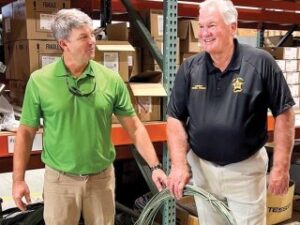

This was an issue that needed to be addressed immediately, because it is very dangerous to steal copper from an energized power pole. It’s also a very expensive crime.
“I have a theory that 90 percent of Crenshaw County are good, law-abiding citizens. It’s the 10 percent who take up 100 percent of my time,” Crenshaw County Sheriff Terry Mears says.
In order to stop the copper thefts, SAEC worked closely with the sheriff ’s departments in Coffee, Pike and Crenshaw counties, which the co-op serves. Thanks to their efforts, the culprits were apprehended and charged to the fullest extent of the law.
“We’re very thankful to our local sheriff ’s departments for their quick action in helping us solve this issue. As a co-op serving rural areas, we have to work closely with our local law enforcement, and we are blessed and fortunate to have some of the finest sheriff ’s departments in the state,” SAEC General Manager David Bailey says.
Russell Thomas has been the Pike County sheriff since 1994. He will start his eighth term in January. Thomas began his law enforcement career at the University of Troy as a member of the campus police department. He went to the Pike County Sheriff ’s Department as a deputy in 1988.
“I’m a Goshen boy,” Thomas says. He has lived his entire life in Pike County and dedicated his professional life to serving and protecting others. He has been in law enforcement for 38 years, and in his tenure as Pike County sheriff, the county's population has tripled in size.
“When I first started at the sheriff ’s department, there were six deputies and just over 600 square miles to cover,” he says. “The county has grown since then, and there are a lot more residents. It’s a good place to work, live and raise your family.”
Early on in life, Thomas realized that serving people was his passion. “I enjoy talking and visiting with people, and it turned out to be my niche,” he says. “I enjoy serving the people.”
 5 days after Terry Mears graduated from high school, he decided to join the U.S. Navy.
“I was 18 and was working at a saw-mill down in Dozier, and I just didn’t see a future there,” he says. Mears was sent to Guantanamo Bay, Cuba, in September 1980 on his first duty assignment.
He spent most of his naval career with front-line units looking for ASW (anti-submarine warfare). He then went to a strike fighter squadron and eventually to the Office of Naval Intelligence in Washington, D.C.
After 24 years of service in the Navy, he retired as a chief petty officer and returned back to his home in Alabama.
After Mears retired from the Navy, he chose law enforcement as his second career. “I respect what they stand for. I spent 24 years of my life going into harm’s way, and first responders do it every day,” he says. “It’s something I was accustomed to doing.”
Mears began working at the Coving-ton County Jail in 2005 and has worked in several other municipalities as an officer. He also served as the police chief in his hometown of Dozier. He was elected as the Crenshaw County sheriff and took office in January 2019.
“I came up through the ranks,” he says. “I always say it’s important to know the people you police.”
Last spring, SAEC informed local law enforcement there was some cop-per being stripped from power poles. Tampering with electrical equipment is extremely dangerous and also illegal. “We assigned deputies to patrol the area, and I called some investigators in,” Thomas says. “Someone was scaling the power poles and cutting the neutral line.”
Having a good working relationship and partnering with SAEC is a special bond for both sheriffs.
“We have a really special relationship with SAEC,” Thomas says. “The men and women who work there live in our com-munities, and a lot of us even went to school together. Some really good people work there. They do a great job serving the citizens of the area.”
Mears says that when the community is in need, SAEC always steps up and is always happy to help.
“We require assistance from them when we have bad storms, and I train my deputies to look for downed poles and things of that nature. We work hand-in-hand helping each other out,” Mears says.
Both sheriffs express their gratitude to the citizens for their help in finding the culprits who were stealing the cop-per wiring. As always, they request that citizens help take care of the community and their neighbors.
Stealing copper is not only dangerous, it’s illegal. As an SAEC member, you own the facilities, the line, the wires and all other tools that keep the lights on in our area
Unexpected outages can be caused by copper theft in our service area. And every time copper is stolen, it costs money to replace it and make repairs. Help us help you!
“If you see something or know something, say something,” Sheriff Russell Thomas says. “We need the public to be our eyes and ears so we can be successful and solve crime.”

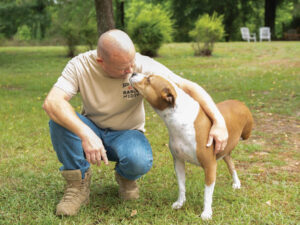
 Bill Richardson has had a dog for as long as he can remember. Now the retired Memphis firefighter has hundreds of dogs — at least temporarily.
Richardson owns Red Fern Ranch in Banks. Named for author Wilson Rawls’ classic book “Where the Red Fern Grows,” the ranch is a rescue transporter, delivering dogs to families eager to adopt a four-legged friend.
“I had been a finder/fixer/foster to adoption for 25 years,” Richardson says. “It’s a supply-and-demand issue. Down South, just about everybody who wants a dog already has three or four. Because of the extremely lax laws, we have a tremendous overpopulation of dogs and cats. Up in New England, their laws are so strict that they don’t have any dogs unless you want to spend $5,000 to $6,000 with a breeder. They can adopt a dog from down here from $500 to $750 — and that includes the transportation to get it up there.”
In Richardson’s work as a firefighter, the overpopulation of pets was impossible to ignore. During his last six months on the job, he pulled 26 dogs off the streets — all from within just a 1-mile radius of the fire station.
“There are literally roving packs of dogs running through areas of Memphis,” he says. “That’s not good for the community. They start getting wild again when they have to start hunting for their own food.”
Richardson, 57, retired three years ago after a 23-year career, and bought a transport trailer that he retrofitted for dogs. He added extra insulation and it’s been incredibly effective — the hottest the trailer got last summer was 68 degrees. Controlling the temperature is important because dogs put out a tremendous amount of heat, he says. He’s already designing a larger trailer in anticipation of expanding.
While some rescue transporters cut corners to maximize profits, Richardson, a stickler for safety regulations, is proud of his record.
“We’ve never lost a dog in transit, either from it escaping or from an illness,” he says.
 A full trailer typically will contain 42 to 45 dogs, and the most he’s ever had on a trip is 53.
“I only have 38 kennels, but will double up in an appropriate-sized kennel,” he says. “Some carriers will take a trailer of my size and put 125 dogs in there. They’ve got them stacked on top of each other. They’re doing it for the money. I refuse to do that.”
Richardson makes the run from the Mississippi Gulf Coast to the Northeast every two weeks. He leaves Banks on Wednesday afternoon and drives to Moss Point, Mississippi. He spends the night there and local rescue groups meet him on Thursday morning with dogs who need a ride. He then goes on to additional pickups in Meridian, Birmingham, Cullman and Tuscumbia before ending the day outside of Memphis.
A crew helps feed, walk and clean the dogs there and the trip continues the next morning. The deliveries to adoptive families begin in middle Virginia and continue through West Virginia, Maryland, Pennsylvania, New Jersey, New York and Connecticut.
Richardson is a road warrior. His red transport trailer has been running for a year and a half. His year-old truck has 160,000 miles on it, all while gas prices are setting record highs almost daily. It’s a tough business, but it’s less a business than it is a calling.
“It’s not unusual to pull into Plainfield, Connecticut, and there will be 25 to 30 families waiting,” Richardson says. “Children are holding up posters that they’ve made with their crayons with their dog’s name on it. Stuff like that, no amount of money can buy that.”
Richardson delivered 860 dogs to families last year and will transport even more this year. But he wasn’t always so busy.
“I made some trips with as few as four dogs,” Richardson says. “My dad was like, ‘Bill, you’re going to lose money on that trip.’ I said, ‘No doubt about it. But I made a commitment and I’m not going back on my word.’”
To Richardson, his trips are about so much more than just driving dogs across the country.
“We’re transporting unconditional love, loyalty, companionship — everything that my dogs have provided me over the course of my lifetime that is missing in these people’s lives,” he says. “That is what we transport. It comes in the shape of a dog.”