
Font Size:


 Being a lineman isn’t for everyone. Often, they are called away from friends and family to work long days and nights in difficult conditions. They might be asked to ignore storm damage on their own property for days while they restore power for neighbors they may have never met.
“It’s not an easy job. But every one of our linemen knows what they signed up for and is willing to make sacrifices for our members,” says Ronald Wade, manager of engineering and operations for South Alabama Electric Cooperative. “It really is a calling.”
As a result, linemen tend to share a level of dedication to the job and develop tight bonds with one another while working long hours together. Being able to trust the other members of their team and having an understanding of each person’s strengths and weaknesses is crucial when working with potentially dangerous electrical equipment.
The camaraderie among SAEC’s linemen was apparent on the afternoon of June 1 and the morning of June 2, as the cooperative hosted its Lineman Appreciation event and annual breakfast. The events were put on in association with Alabama’s Lineman Appreciation Day, established in 2014 by state legislators.
SAEC hosted the events at its Troy office as a way of giving back and saying thank you for the essential work that linemen do to provide affordable and reliable electricity for its members. Cooperative leaders also attended to express their gratitude in person.
“Most people probably don’t think about the work linemen do until the lights go out. But the truth is they work tirelessly all year long so those moments of darkness are few and far between,” General Manager David Bailey says. “This was just one small way for us to let our linemen know we appreciate all their hard work.”


 For more than 20 years, South Alabama Electric Cooperative has helped support our community by presenting $1,000 Electric Cooperative Foundation Scholarships to deserving high school seniors planning to attend an accredited 4-year college, a junior college, a technical school or a vocational school.
This year, SAEC selected 16 deserving seniors who were awarded scholarships to give them a head start on their college careers.
Scholarships aren’t the only way SAEC gives back to our community. To learn more, visit our website. If you would like to apply for next year’s Electric Cooperative Foundation Scholarship, watch for more information later this year in your Alabama Living magazine and on our website.
Alexis Danielle Barker Zion Chapel High School
Anna Katherine Kimbro Brantley High School
Anna Grace Crowles Highland Home High School
Ariel Latrese Croswell Highland Home High School
Caitlin Elizabeth Hughes Goshen High School
Ali Michelle Hendrick Crenshaw Christian Academy
Anna Marie Lowe Crenshaw Christian Academy
Elizabeth Ayden Jones Luverne High School
Hannah Alexis Arnold Zion Chapel High School
Hannah Grace Hunger Charles Henderson High School
Jaylen Tomaras Deveridge Charles Henderson High School
Madison Leigh Lowery Luverne High School
Megan Claire Mount Brantley High School
Olivia Jewel Kyzar Goshen High School
Porter Lanier Lankford Pike Liberal Arts
Sarah Todd Floyd Pike Liberal Arts

 During storm recovery Electric System Engineer Mike Chirico usually coordinates crews from the office. But when the extent of the damage caused by a storm that swept through South Alabama Electric Cooperative’s service area on April 19 became clear, he knew the system would need all the help it could get.
“I actually went out there and started pulling wire that night,” he says. “I got one of our contractors to come in as a construction crew, and since I was familiar with them, it made sense to lead them around. I just paired up with them and worked with them the whole time.”
Meanwhile, Manager of Engineering and Operations Ronald Wade was tracking outages using the cooperative’s SCADA and outage management system. The damage was almost overwhelming, impacting just about every part of the system.
“It was so hard to determine where we even needed to start,” he says. “From 11 p.m. that night, when those unreal winds came through, we had a little over 12,000 accounts out. That’s more than 70% of the system.”
On the ground, it quickly became clear to Chirico that much of the damage would require more than a quick fix. Across the system, trees had been uprooted and thrown across lines that would need major repairs.
“Some storms are mostly lightning damage, so you can basically replace a fuse and get those members on. This was not one of those storms,” he says. “This was one where every outage call we got would have multiple spans of line down with trees on it. This was a real storm.”

Construction Foreman Dewayne McGhee and his crew were called in at 11 p.m. Sunday night. By 1 a.m., they were working on the main feeder line out of the Fullers substation north of Luverne as PowerSouth made repairs to its transmission lines. Once the substation was up and running, they joined in the effort to rebuild lines across the system.“We worked all Sunday night and all day Monday and probably got back in at about 11 p.m.,” McGhee says. “We were able to go home, but we had to come back and get breakfast at 5:30 and start all over. So you were looking at 18- to 24-hour days all week.”
By Tuesday, help had started to arrive from other cooperatives across the state, including Tallapoosa River Electric, Mar-shall-DeKalb Electric, Cherokee Electric, Joe Wheeler Electric, Tombigbee Electric, Sand Mountain Electric, Cullman Electric and Dixie Electric.
“When we put out the call for help, our sister cooperatives were ready and willing to respond,” says General Manager David Bailey. “We are deeply grateful for the crews who volunteered to make the trip, sometimes from across the state, and look forward to repaying the favor.”
Those cooperatives pulled together to provide nearly 150 extra linemen to help tackle the repairs. Together with SAEC’s crews, they were able to restore power to the vast majority of members over the next few days.
“In this case, the numbers came down pretty rapidly. We concentrate our man-power on the lines that get the most people on the quickest,” says Chirico. “So normally we fix the feeders and line sections that will bring on hundreds of members at a time first. Then, in the last day or two, we might work half a day to pick a line that gets one or two customers back on.”
Repairs faced a delay on Thursday as another storm swept through south Alabama. By Friday evening, linemen were finally able to return home at a normal time. For many, it was the first chance they had in almost a week to assess damage to their own property.
“It’s hard to come out here and work knowing that you’ve got damage at home and stuff you can’t check on until you get everyone else’s power restored,” says McGhee. “But that’s part of our job.”
Linemen weren’t the only SAEC employees working overtime. The cooperative’s office staff dedicated themselves to supporting repair efforts by fielding calls from members, delivering food to linemen on-site and arranging lodging for visiting crews.
“It makes you feel like they really do care about you. Even with the coronavirus going on, there were people bringing us a nice hot meal while we were working and couldn’t get to anything,” says McGhee. “I thank them for what they did and making sure that we were taken care of and staying safe.”
Members also made their appreciation known, with many sending thank you notes to SAEC’s linemen. Some members even came out and thanked the crews on their street personally. “We had one member who brought a box of potato chips, snacks and drinks to the crew I was with,” says Chirico. “You’ll run through a wall for people like that because you know they appreciate you. It’s a big deal.”
Those moments are also a reminder for many linemen why they do what they do. For all the challenges they face, some linemen have even come to enjoy the restoration efforts after major storms for the way the cooperative and the community come together.
“We look out for each other at this cooperative. The same goes for the contractors and other cooperatives that came to help us, many of them from north Alabama,” says Chirico. “You can’t recover from a storm like this without some help. But they know and we know that when they’re in trouble we’ve got their back, too. It really is a family.”

After months of work, completion of the warehouse for South Alabama Electric Cooperative’s new building is set for this month. As move-in day approaches, Manager of Stores and Purchases Wayne Mitchell is already thinking about the extra space the new facility will afford his team.
“We’ll be able to use it as our regular warehouse, and it will give us so much more room,” he says. “The old warehouse was good for the cooperative’s needs at the time, but now we have so much more technology we need to be able to store safely, and the new warehouse gives us the ability to do that.”
The new warehouse will more than double the available floor space, providing room to store valuable materials now kept outdoors. It is also designed from the ground up for forklift use, which will help employees move larger materials faster and more efficiently.
In addition to the warehouse, the new storage facility provides an expanded truck shelter so SAEC can keep all of its vehicles out of the elements. Mitchell estimates that the cooperative currently must park half of its fleet outside.
“We have some small trucks that just sit out in the elements all the time if we’re not using them,” he says. “If you can keep them out of the sun and the rain as much as you can, that keeps them in working condition longer.”
The new facility even adds room for ware-house employees now forced to share limited office space. The building’s other features include a dedicated foreman’s room, where the heads of each team will have their own desk, and offices for the engineering and construction superintendents. The dedicated meeting room creates a location for monthly safety briefings and training.
“Having the new warehouse ready is an exciting step in the construction of our new facility. I know the additional space and upgraded features will help our team find new ways to better serve our members,” says General Manager David Bailey.
The completion of the warehouse is also a sign that construction on SAEC’s new building is continuing on schedule. Member services and office staff will continue to work out of the current building while construction moves ahead on the new office facility.


 In March, South Alabama Electric Cooperative sponsored 10 students to travel to Montgomery as part of the 2020 Rural Electric Cooperative Youth Tour. They joined more than 150 high school juniors, representing 19 Alabama electric cooperatives, as they toured sites, listened to motivational speakers and spoke to lawmakers in the state capital.
“It was a really great experience because, living in a rural area, sometimes you’re only really around the people at your school,” says Chloe Meadows, a junior at Zion Chapel High School. “So it was really cool to meet people from all over the state.”
This year’s tour, March 10 to 12, gave students the opportunity to visit historic sites like the Alabama state Capitol, the Dexter Avenue King Memorial Baptist Church and the Alabama Statehouse.
Attendees also met with their state legislators and asked them about some of the most pressing issues of the day, including voter registration and the Alabama Farm Bill.
“I knew who my representatives were, but I didn’t realize how much work they actually do for the counties they represent,” says Joseph Riley, a junior at Crenshaw Christian Academy. “It was really enlightening to learn about how they wound up in office and all they do to try to help the community around them.”

In addition, students learned more about the cooperative business model and how cooperatives operate across the state.
“We really think about it as building tomorrow’s leaders,” says Andy Kimbro, SAEC’s manager of member services. “These students will be voters, college graduates and workforce leaders. We want to make sure they are knowledgeable about cooperatives and what we stand for.”
As always, a highlight of the trip was hearing from motivational speaker Cea Cohen-Elliott, who reminded students they can be leaders in their own schools and communities by taking a stand on their beliefs.
“There were probably over 100 people in the room when she spoke, but it felt like everything she was saying was straight to me,” says Meadows. “It was very inspiring and not the kind of thing you get to hear all the time.”
Most importantly, the tour helped students think about what they might want to accomplish after high school and prepared them to be leaders in whatever they choose to pursue.
“It’s an amazing opportunity, and I would encourage all juniors to apply and go on the Youth Tour if they have the chance,” Meadows says. “It’s a great experience.”
 While the paths to victory for the Pike County Bulldogs boys and Charles Henderson Trojans girls basketball teams varied, they ended with the same result: high school state championships.
Pike County toppled Lauderdale County 59 to 45 to claim the Alabama High School Athletic Association’s Class 3A boys title in basketball. Charles Henderson edged Madison Academy 50 to 48 to win the AHSAA Class 5A girls championship in February. For the Bulldogs, it is the first state basketball championship in program history, while the Lady Trojans earned their second title in three years.
“You have one that wins in 3A and one that wins in 5A, and they’re so close,” says Bulldogs head coach Doug Holland. “Try to find that anywhere else, and I bet you can’t. The kids in Pike County work harder. The kids are so close.”

For Troy-based Charles Henderson, the journey to an undefeated season began just moments after a loss to Ram-say in the 2019 regionals ended the Lady Trojans’ bid to repeat as Class 5A champions.
“We had motivation,” says coach Dyneshia Jones, whose program has reached the semifinals in 3 of the last 4 seasons. “Although we lost two seniors, we still had Division I NCAA type players and Division I junior college players.”
The incentivized Trojans sunk hours of effort into the weight room and summer workouts, which paid dividends as the 2019 to 2020 season progressed, Jones says.
“We had a lot of committed players during the summer,” she says. “I’ve never had a team that had the 15 roster spots filled, because it’s tough to be a part of this program. Credit the young group for stepping up.”
The younger players supplemented the efforts of Division I signees Samira Moore, who signed to play for Troy University, and Niaira Jones, who inked a scholarship with Belmont University. The combination ultimately produced 29 wins, many by double digits, and no losses.
In the playoffs, Charles Henderson won games by 68, 54 and 40 points before edging Madison Academy by two for the title.
 Just about 8 miles to the southeast, Pike County High is in the small city of Brundidge — a place known more for its athletic prowess on the gridiron. Five Bulldogs football teams have won a state title.
In recent years, though, Holland has built Pike County’s basketball program into a contender, and he used the Charles Henderson program as a model.
“State tournament appearances are like an annual trip for them,” he says. “Even though it’s girls vs. boys, we modeled our program after them. If you look at them, it’s not easy being on their team. If it were, 14 or 15 would be on their bench.”
Despite the tough practices and work-outs, the Bulldogs didn’t gain momentum until after tragedy struck. Teammate Reginald Edwards passed away from injuries sustained in a car accident during the Christmas holidays, but the team rallied, Holland says.
“The players started focusing on working harder in practice,” he says. “You could see the trend. They were getting better.”
Holland realized Pike County had the ability to win a state championship after the Bulldogs defeated traditional 7A power Central of Phenix City, pushed Class 6A Final Four participant Eufaula to overtime and lost a close one to Class 6A Dothan during a tough stretch of games.
After edging nearby Pike Road in the regional semifinals with a 77 to 73 overtime victory, the Bulldogs won the next three games by more than 10 points each en route to the championship.
Holland believes community support, especially following Edwards’ death, fueled the Bulldogs’ strong finish.
“We have great support. The people in Brundidge care about athletics,” he says. “The tragedy brought us together as a community and was a vital part of the stretch run.”
Some of the support, especially during the state tournament, came from the Lady Trojans. Coach Jones says familiarity inspired that development.
“My girls and their boys are always at the Troy Recreation Center playing pickup games,” she says. “Our girls were cheering them on. It’s not like how it used to be when there was this big rivalry between Brundidge and Troy.”
South Alabama Electric Cooperative General Manager David Bailey congratulates the Pike County boys and Charles Henderson girls for their accomplishments.
“Most electric cooperatives, by nature, serve rural areas, and South Alabama Electric is no different,” he says. “That is why having two state champions within our service area represents a tremendous accomplishment and a great reward for years of hard work, dedication and focus. We are proud to serve fine people like these teams in Pike County.”

 How many Alabamians answer a 10-question survey in the next few months could vastly shape the political future of Pike and Crenshaw counties as officials conduct the 2020 census.
Congress has organized a census every 10 years since 1790, and those surveys have always helped determine how much representation each state receives in the federal government, says Dr. Steven Taylor, a political science professor and dean of Troy University’s College of Arts and Science. Following each census, Congress determines if the number of U.S. House of Representatives members each state receives will be adjusted in an effort to ensure each district has roughly the same population and representation.
Since Congress shapes several policies for our nation’s government, each census “can have a profound effect” on the country’s political future, Taylor says. The 2020 census may be the most critical in Alabama’s history, though.
Since the early 1970s, Alabama has sent seven Congressmen to the U.S. House of Representatives due to its population, but most projections indicate that number will drop to six following this year’s count, Taylor says. That is because Alabama’s population growth in the last decade has not matched the growth rates of some other Southern states like Georgia and Florida.
If the drop were to occur, Alabama’s influence in Washington, D.C., could wane, especially since the loss of a representative also results in the loss of an electoral vote in future presidential elections, Taylor says.
Additionally, the loss of a representative and the accompanying district would result in Alabama’s remaining congressional districts growing in size. The redrawing of the districts could have a major impact on the 2nd Congressional District — especially Pike and Crenshaw counties, since both lie close to other congressional districts.
“Each district line has to be shifted,” Taylor says. “As you reconfigure districts, you have to consider the population anchor points. Montgomery is a big player. Mobile is a big player.
“It certainly could change the dynamics of what is important to the district. Montgomery has different issues than Mobile’s issues.”
Since the early 1970s, Pike and Crenshaw Counties have occupied a space in the 2nd Congressional District, which has elected a Republican in every election since then except one. Crenshaw County lies on the border of the 7th Congressional District, a Democratic stronghold.
In addition to representation, the census also determines where federal funding for 132 different programs goes, Taylor says. A strong census participation rate would ensure communities receive the funding and the representation they are rightfully entitled to, says David Bailey, South Alabama Electric Cooperative’s general manager.
“We encourage all of our members to answer the census questions when they have the opportunity to, beginning in mid-March,” Bailey says. “An accurate count ensures we have a strong voice in Washington, D.C., and ensures our communities receive the federal funding support that our education, health care and transportation systems deserve.”
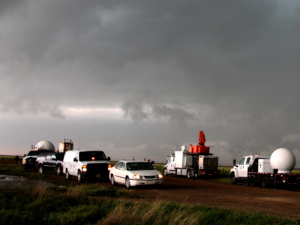
Though spring can bring several severe weather threats, some attention to detail can help South Alabama Electric Cooperative members weather the storms.
“Preparedness includes thinking about the things you wouldn’t normally think about,” says Elliott Jones, Crenshaw County’s Emergency Management Agency director. “The public needs to be weather-ready and weather-aware.”
Jones encourages everyone to create emergency plans to help safeguard themselves and their properties against severe weather. He emphasizes the importance of communication.
“You need to have severe weather notification devices like smartphones or weather radios,” he says, noting residents should not rely on outdoor warning sirens. “You need to have backup batteries for the weather radios. You also need to have a safety plan, and you also need an accountability plan if your family members get separated from each other.”
Residents should store emergency contact numbers in their cellphones, including numbers for local emergency management offices, Jones says. Pike County residents can reach their EMA office at (334) 566-8272, while Crenshaw County residents can dial (334) 335-4538 to access theirs.
Plans should include the creation of a stockpile of supplies, beginning with enough nonperishable food and water to last three days, he says. Water supplies should be sufficient to provide 3 gallons of water for each person daily.
Jones also recommends assembling an emergency kit for vehicles as preparation for possible evacuation. For a full list of materials officials suggest for an emergency kit, visit the Ready website or the American Red Cross website.
Finally, Jones suggests that plans include provisions for animal care and property loss. Proper planning will prevent pets from running away during a storm and ensure that residents know where they could stay if their homes are damaged.
“You need to have a recovery plan,” he says. “You need to know where you might go if you are dealing with property damage. The incident is very short, but the recovery can be very long.”

Sources: The Electrical Safety Foundation International and the Department of Homeland Security.

 Most of our members probably don’t spend much time thinking about where their power originates as long as it works when they need it. But at South Alabama Electric Cooperative, understanding the generation sources is key to our mission of providing reliable and affordable energy.
Just like our members are part of this cooperative, SAEC is a member of PowerSouth Energy Cooperative in Andalusia. PowerSouth invests in the large facilities required to generate safe, reliable, affordable and environmentally responsible electricity. We purchase wholesale energy from PowerSouth.
Today, PowerSouth’s energy mix consists of natural gas, 77.2%; coal, 18.9%; hydroelectricity, 3.6%; and renewable resources such as landfill gas and wind, 0.3%. But between technological advancements and environmental regulations, there are changes in store.
“PowerSouth is taking steps today to ensure a safe, reliable and affordable energy supply for the future,” says Ron Graham, PowerSouth’s vice president of power supply. “The long-term power supply plan includes implementing cutting-edge technology, construction of a new natural gas-generating plant and further diversification of energy resources.”
By 2026, PowerSouth projects its energy mix will consist of natural gas, 77.0%; nuclear, 10.7%; coal, 6.4%; hydroelectricity, 3.5%; and renewable energy, 2.4%. But while changes are in store, Graham is confident the quality of service will not change.
“PowerSouth will continue providing the most reliable and best-priced power for members’ future needs,” he says.

Coal will be the part of PowerSouth’s energy mix most impacted by the coming changes, in particular the Charles R. Lowman Plant near Leroy, Alabama. The plant has been a cornerstone of PowerSouth’s generation fleet since 1969.
However, in order to comply with regulations imposed by the Environmental Protection Agency, continued operation of the coal-fired facility would require an additional investment of more than $160 million. Due to those costs and the potential for additional future regulation, PowerSouth’s board of trustees voted to cease operations at the Lowman Plant by October 31, 2020.
“When weighed against the costs and challenges of bringing the Lowman Plant into compliance with these regulations, building a combined-cycle natural gas plant on the Lowman site stood as the more cost-efficient and long-term solution,” says Graham.
This new natural gas facility, the Low-man Energy Center, is scheduled to go into service by 2023. It is designed to incorporate advanced generation technology that will produce electricity in the most efficient and environmentally friendly way possible.

In addition to natural gas, nuclear power will play a bigger role in the energy mix as reliance on coal decreases. PowerSouth views nuclear energy as a viable option for generating large amounts of power without air pollutants or greenhouse gas emissions.
PowerSouth will purchase nuclear power from the Municipal Electric Authority of Georgia. This energy will be generated from the Vogtle Nuclear Power Plant’s two new units, which are under construction. The addition of nuclear power will bring additional diversity to PowerSouth’s energy mix, keeping costs low and reliability high.
“A diverse power mix is vital to supplying uninterrupted power and for keeping costs stable,” says Graham. “Nuclear energy supports our strategic initiative of maintaining that diversity.”
While PowerSouth will not own the nuclear power plant that generates the electricity, this agreement will allow the cooperative to purchase a portion of the energy it produces. That purchase is scheduled to begin in November 2021.
“The nuclear power purchase will provide approximately 10% of our members’ energy needs by 2022,” says Graham. “The advantages of nuclear power include rate stability and diversity of our energy portfolio to help us meet our mission of providing reliable and affordable energy to the communities our members serve.”
As consumer interest in solar power increased in recent years, PowerSouth has kept a close eye on the costs of providing a utility-scale solar option to its distribution members. In 2022, PowerSouth plans to launch a solar project in partnership with those members.
“PowerSouth has monitored the cost of utility-scale solar as end-use consumers’ desire for renewables has grown,” says Graham. “Over the past several years, prices have decreased to the point that solar is a cost-effective choice for power supply in the near future.”
The project will add up to 80 megawatts of solar-generated energy to PowerSouth’s energy mix, enough to power a portion of the needs for more than 13,200 homes. However, it is important to remember that solar energy is not currently a solution for large-scale generation.
“Adding solar generation promotes diversity of our energy mix, but it also presents challenges because of its intermittent nature,” Graham says.
Solar energy only produces electricity when the sun shines. As a result, most solar customers will still need a connection to the electric grid to maintain reliable service. This can require additional fees as the electric distributor must continue paying to maintain its system, even while solar customers purchase less energy.
In order to keep providing affordable and reliable energy, PowerSouth will continue to rely on traditional generating sources like natural gas.