
Font Size:


 Many people think the key to keeping their electric bill consistent is leaving their thermostat at the same temperature all year. The truth is that even if the temperature in your home remains unchanged, your heating system has to work harder to maintain it during colder months.
Fortunately, keeping your electric bill under control during the winter months doesn’t have to be complicated. Try a few of these simple steps around your home to see how much of a difference it can make on your monthly electric bill.

 Aaron Hendrick joined South Alabama Electric Cooperative as a full-time employee in December 2019. He is a 2015 graduate of Crenshaw Christian Academy, and he attended Troy University before finishing his bachelor’s of engineering degree last year at Auburn University. He previously worked part time for SAEC as a groundsman and engineering assistant during his summer and Christmas breaks while in college. He is now working to earn his professional engineering license.
What are your responsibilities as an electrical engineer?
I maintain the metering technology to ensure we get dependable and accurate readings. I inspect the substations and the three-phase breakers monthly. I record data for system improvements. In the case of a major storm, l report the damages to the dispatchers so they can get the material and manpower needed to restore the outages.
What made you want to join the SAEC team?
I worked part time while attending college. I liked the environment of the cooperative and their attitude toward the members.
What is your favorite part of the job?
I like working with new technology and electricity. My job takes new technology and uses it to make SAEC as efficient as possible. I like that my time is spent equally in the office and in the field. I like that I am familiar with the area and some of the members.
What do you think is the most important impact SAEC has on its community?
When I was a junior in high school, I went on the co-op Youth Tour with SAEC. I enjoyed the experience, and I would recommend it to others. I also think the scholarship opportunity is a great way to help the community. The service area depends on us to keep the power on.
What is your favorite thing to do when you aren’t working?
I spend my free time hunting, fishing and hanging out with my girlfriend, Madyson; my family; and Remi, my chocolate Labrador retriever. I enjoy staying outside and staying busy.
Who is the most inspiring person in your life?
My grandfather Jimmy Baggett. His dad, Andrew, helped install the first electricity in the Glenwood area. He is a plumber and electrician, and he also taught me about electricity. He is a hard worker and very detail oriented in his work. My dad, Michael, also taught me how to work hard and always have goals to work toward in your life.
What is the best piece of advice you have ever been given?
“I believe in work, hard work. I believe in education, which gives me the knowledge to work wisely and trains my mind and hands to work skillfully.” — The Auburn Creed.

 South Alabama Electric Cooperative first announced its plan to build a new home in summer 2019. This summer, just 2 years later, members will see those plans come to fruition.
Some members may have already noticed the walls and brickwork going up around the administrative portion of the new building. While the cooperative’s office staff are eagerly awaiting the building’s completion, some SAEC employees have already had the chance to take advantage of other new facilities.
Construction of a warehouse and fleet area was completed last summer, so the cooperative’s linemen and construction crews have enjoyed the space since Labor Day. For General Manager David Bailey, the advantages of that new facility are already clear.
“As much as we had outgrown our current building, when it comes to employees, we had also outgrown our storage,” he says. “We’ve got transformers, breakers, regulators, capacitors and so much more. Now, it’s all accessible so our crews can get to it without having to move everything around.”
With four construction crews and four service crews preparing each morning for work, that extra room is crucial to keeping operations running smoothly. It also helps protect members’ investment in the cooperative’s equipment.
“Everything is under cover, where before it wasn’t, so things are able to stay cleaner and in better condition,” says Ronald Wade, manager of engineering and operations. “Those are expensive pieces of equipment, and keeping them out of the elements means they can last longer.”

SAEC leaders want its new facility to feel like home when members enter its lobby and offices for the first time, right down to the building material. One way cooperative leaders decided to accomplish this was by using wood from the property.
As plans for the new building took shape and construction began, it became clear that many trees would need to be cleared.
“Many of these trees were there when our current building was constructed,” Bailey says. “They’re old-growth pines that we’re thinking might be around 100 years old. So we didn’t want to just destroy them. Instead, we decided they could give the new building a unique look.”
As the finishing touches are put on the new facility, that wood will be used to give the boardroom, offices and hallways a bit of local flavor. It will also be the foundation for a special “Member Wall” in the lobby which will recognize some of SAEC’s largest industrial accounts.
“It’s a way for us to be good stewards of the environment,” says Andy Kimbro, manager of member services. “At the same time, we can mark how the cooperative has changed over time and give our new home a special touch of history.”

Once complete, SAEC’s goal is for the new facility to be a great place for employees to work and for members to handle cooperative business. The hope is that it will be an asset to the community at large. That starts with a new and improved community room open to local civic groups.
Some members may recall that SAEC’s current building had a similar community room available years ago. Its limited size, placement far from the kitchen and security issues that required it to be unavailable when the offices were closed, however, were problematic. Eventually, it became a space primarily used for cooperative business.
“We hated that. There’s nothing like this our community can use, and it was important for us to use this opportunity to give back,” Kimbro says. “It’s one of our core principles to support the community, but it was also just the right thing to do.”

The new community room is structured so that it can host community events for civic and economic development groups. It is expected to accommodate more than 250 people and seat more than 150 for dinners.
While members can look forward to visiting their new cooperative building late this summer, the facility is also designed for the potential of future expansion and adjustments. That includes two sites prepared for electric charging stations as electric vehicles become more common along Highway 231.
“We’re really trying to think ahead and incorporate everything we might reasonably need in the future,” Bailey says.
And while the 2020 storm season was brutal for SAEC and surrounding cooperatives, those challenges helped clarify the need for a new place to call home. It even provided inspiration for some improvements along the way.
“Through the storms we’ve experienced and seen other cooperatives go through, it’s been a reminder that you can’t wait until a crisis hits to build something you need,” Kimbro says. “It showed us what we’re doing right and some things we can still tweak in the process so we build something for our members that will last for a long time to come.”

 As a not-for-profit utility, South Alabama Electric Cooperative puts our members first in everything. One way we do that is by returning unused funds to members through the capital credits program. This year, SAEC is returning nearly $1.3 million to our members.
 At the end of each year, SAEC subtracts expenses from total revenue and sets aside the remaining money to give back to members in the form of capital credits. Members receive a portion of those credits based on their purchases from the cooperative in the past year. These credits serve as a reflection of each member’s ownership of the cooperative.
 However, not all credits returned to members are from the previous year. Because SAEC still needs funds to continue operating, expanding and making improvements to our electric system, we use a hybrid method to return capital credits. The 2020 retirement will include funds from 1989, 1990, 1991 and a portion of 2019.
 Counting this year’s repayments, SAEC has retired more than $15 million in capital credits to our members. This program is just another way we put our members first in everything we do.


 Vera Tisdale can still remember the first time her family moved into a house with electricity. For her mother, the home in Brantley meant their activities were no longer dictated by the rising and setting of the sun. But as a 5-year-old in 1924, Tisdale was happy she and her friends could play longer.
Now 101 years old and once again living in her hometown, Tisdale looks back at those days of play in her childhood as formative experiences that defined her creativity and desire to be an active member of her community. They even shaped her career as an educator.
“I would put my dolls up in a row, and I had a little blackboard on a screened-in back porch,” Tisdale says. “So I started teaching at a very young age, and I continued it for 36 years.”
After graduating from high school in 1937, Tisdale had her sights set on Troy University, which at that time was Troy State Teachers College. Tisdale began working on her degree as part of the school’s first class for the National Youth Administration, a New Deal work-study program.
By her junior year, Tisdale was on course for her future. She was chosen as one of 13 students to take full-time teaching jobs for credit during their senior year. Then, on the cusp of fulfilling her childhood dream of becoming a teacher, the 1941 attack on Pearl Harbor changed everything.

Visiting the local movie theater for Saturday matinees was always a thrill for Tisdale growing up. So it was no surprise that on Sunday afternoon, December 7, 1941, Tisdale found herself at the movies with her date. They had arrived early, so she waited in her seat while he went to get popcorn.
“I’ll never forget, when he came back he looked at me and said, ‘I can’t believe what I’ve just heard. Japan has bombed Pearl Harbor,’” Tisdale says. Shortly after, the manager confirmed the news to the audience. “That was the change of my life, because the whole world was different to me after that.”
When the school year finished, she moved to Mobile to work at Brookley Air Force Base, where she joined other volunteers in disassembling and testing aircraft radiators.
“That’s when I really learned about people and how different they are,” Tisdale says. “They came in all sizes and shapes, but we worked with every person who wanted to help.”
B-24 bombers would occasionally come through with their full crews before deploying. From the moment they arrived to the moment they left, Tisdale noticed how the crews would never leave their plane’s side. “They would stay with it right up until they painted a logo or a pretty girl or the name of the plane,” she says. “You could see how proud they were of it.”
After 2 1/2 years in Mobile, Tisdale knew it was time to finish her degree. Troy University had been temporarily converted into a radar school for the armed forces, so she waited a semester to resume her studies. After taking classes every summer for several years, she finally completed her degree in 1947.
Tisdale didn’t waste time getting back into the classroom. She taught for six years at elementary schools in Atmore, Tallassee and Andalusia before taking high school positions in Troy, Dothan and Albany, Georgia. At the latter, she set up a distributive education program, teaching students marketing and everyday skills through a combination of classroom courses and on-the-job training.
Her work attracted attention from universities throughout the Southeast as they set up similar programs. Ultimately, Tisdale couldn’t pass up a chance to teach alongside her beloved Crimson Tide, and she took a position at the University of Alabama in 1965.
At the university level, she was tasked with teaching other teachers, but the goal remained the same: to create a roadmap her students could follow for the two-year program and beyond. That required an understanding of each student on an individual level, something she fears has been lost in education.
“I tried so hard to build a student’s self-esteem. You’ve got to look at their abilities and what they can do,” Tisdale says. “Today, we think all students need is to learn how to use a computer. But it’s different from being taught to reason, look at both sides of a question and make a decision.”
After 14 years at the University of Alabama, Tisdale retired and returned home to Brantley in 1979 so she could take care of her aging parents. It was a difficult decision, as it meant abandoning her hopes of earning her doctorate.
With more time now available to her, Tisdale began compiling a history of her hometown with the help of her cousin Debbie Roberts. The project led to a lasting friendship with Brantley Mayor Bernie Sullivan, who regularly found himself drawing from her well of knowledge.
“She’s probably the best historian I’ve ever been around,” Sullivan says. “I’m originally from Florida, so if I had any questions about the area I could always call her.”
After her parents passed, Tisdale took some time to recover physically and emotionally before deciding it was time to see more of the world. First on her list was to take the Grand Tour, a trip based on the custom of visiting the cultural landmarks of classical Europe.
“I’d always been interested in history, and it was so good to see the places I’d studied and read about,” she says. “I advise anybody who wants to go to do your reading first so you’ll know what you’re looking at.”
Tisdale quickly became Roberts’ favorite traveling partner thanks to the historical context she could provide wherever they went. In particular, she remembers visiting Civil War sites in Buford, South Carolina, and Williamsburg.
“We went to graveyards and churches, and everywhere she knew the whole history,” Roberts says. “Her background in history is what made things come alive.”
Tisdale has been many things to the people in her life. To her cousin Chuck Burgess, she is defined by her generosity to others. To Roberts, she is an example of how to age with grace and dedication to the community. To Sullivan, she’s the model citizen.
As for Tisdale herself, the legacy she hopes to leave behind is one of giving confidence and curiosity to the students she has met throughout her life, whether inside or outside of the classroom. Those hopes were vindicated on her 100th birthday when she received dozens of letters from former students.
“I had 40 letters from former high school students thanking me for what I’d done for them,” Tisdale says. “Each one had the same theme: You made me feel like a good student. That’s my legacy if I have any.”
When she moved back to Brantley more than 40 years ago, Tisdale didn’t plan to stay permanently. But as the years passed, she found it increasingly difficult to leave her hometown. As far as Mayor Sullivan is concerned, it’s the community around Brantley that makes it hard to resist. And Tisdale can count herself among the most beloved members of the town she calls home.
“I always say, if you visit Brantley you get the scent in your shoes and you don’t want to leave, because of the people,” Sullivan says. “She’s one of those top people. That’s in a nutshell what she means to me. She means Brantley.”

 The winter months bring with them family holidays, football on TV and an annual visit from Saint Nick.
But it can also bring along higher energy costs that come with warding off the colder temperatures and shifting from daylight saving to standard time in most states.
The switch from daylight saving time means shorter days for the most part, meaning lights burn longer and the days get cooler as darkness falls earlier, keeping the electric meter running.
Decorating for the holidays with lights and with inflatables that require electric air pumps can also raise electric bills during wintertime.
Sources: Energy.gov and PR Newswire.
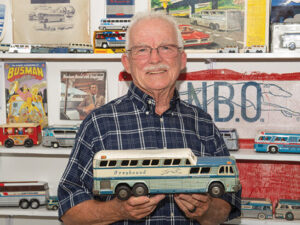

By the time he turned 24, Harry Richardson had grown used to being called small. It hadn’t stopped him from serving for 6 years as an Army engineer, but on the hunt for a new job in Memphis, he kept running into the same roadblock.
“I’m just a little guy, but I’ve got some spunk in me,” he says. “But at that time in history, there were height and weight requirements for some jobs.”
His first idea was to apply to be a motorcycle policeman. They told him he was too short and didn’t weigh enough. Next, he went to the fire department, where they said the same thing. Then he saw in the paper that Greyhound Lines was hiring bus drivers.
When Richardson showed up, he quickly realized he was the youngest and smallest of the more than 60 people applying. He took the written test anyway and left expecting to be passed over once again. Later, when the hiring manager called him, he heard a familiar refrain. But this time there was a twist.
“The guy called me up and said, ‘Richardson, you’re too short and you don’t weigh enough.’ I told him I’d heard that before. Then he said, ‘But you’re the only one who passed the test.’ So I became a Greyhound bus driver.”
Now 76, Richardson has never stopped driving, whether for Greyhound, for his own bus company or to shuttle South Alabama Electric Cooperative’s representatives for the Montgomery Youth Tour to the state capital. While it may not have been his first choice, there is no place he would rather be than behind the wheel.
“I’ve been driving a bus for 51 years now and covered over 4.5 million miles,” Richardson says. “I guess you could say it’s in my blood.”

Richardson didn’t know much about driving buses when he joined Greyhound, and he had no choice but to learn fast. One of the most important skills he picked up along the way was how to man-age people, and not always under friendly circumstances.
“With Greyhound, I drove so many different types of people, from poor to rich, foreign or domestic,” he says. “You learn a lot about people and how to handle different personalities. In my decades driving for them, I probably had to have 400 people pulled off the bus for being disruptive.” That calm under pressure and dedication to his passengers’ safety would also set Richardson apart as he vied for the privilege of transporting famed football coach and commentator John Madden.
Since Madden didn’t like to fly, Greyhound buses would ferry him from game to game during the NFL season.
“It was like the pony express, because drivers would pass him off to each other to get him to his next game,” Richardson says. “We would have a bus driver rodeo to decide his drivers.”
Those rodeos included navigating through cones forward and backward, as well as tests where each driver would be timed on their ability to find hidden deficiencies in their bus. The competition could be tough, and only two drivers were selected from each state.
“I was one of the two they picked from Tennessee, and I was proud to be chosen,” Richardson says. “It made me feel like I must be doing a good job if they thought I was qualified enough to do that.”

Richardson left Greyhound after 23 years, but he didn’t stop driving. With industry contacts he built over years, Richardson established his own company and started driving independently. His first major contract was with University of Memphis Athletics, carrying teams, including John Calipari’s basketball squad, to games across the country.
But his real breakthrough was a contract with the National Defense University in Washington, D.C. At least once a month, military officers and foreign officials studying at the National War College, the Dwight D. Eisenhower School for National Security and Resource Strategy, and the College of International Security Affairs would take a trip across the country.
“They would give me their schedule a year in advance, and I would meet them at the naval base in San Diego, Boeing in Seattle, the U.S. Central Command in Tampa or somewhere else and drive them around while they were there,” Richardson says. “I worked with over 1,000 military officers from 100 different countries. It’s really kind of humbling to me.”
On those trips, Richardson had the chance to connect with future world leaders, like current Israel Defense Minister Benny Gantz, and he even brushed shoulders with President George H.W. Bush at his library in College Station, Texas. But he also enjoyed simply getting to know people who had grown up in different circumstances than his own.
“Some of the men from former Eastern Bloc countries would be very stoic when we met, and I would consider them my challenge for that year,” Richardson says. “I would learn all their names and where they were from, and after a couple of months we would hug whenever they got off the plane somewhere.”
Richardson retired after another 23 years of driving privately, but not before the National Defense University could honor his years of service with an honorary degree. Looking back, it is still one of the most surreal experiences of his life.
“They would have a graduation ceremony every year, and that year the president of the university had a diploma and a plaque for me,” Richardson says. “I remember looking at the crowd and seeing King Abdullah from Jordan clapping for me. All I could think was, ‘Wow, all of this for a bus driver.’”
While Richardson spent most of his life in Memphis, Troy has always been his first home. It’s where he spent the first five years of his life on his grandfather’s farm and where his family has tended to the Richardson Farm for over 125 years. When he retired six years ago, he knew it was time to return.
“My dad moved to Memphis for work right after World War II. But I always felt like it was my destiny to come back here and help take care of the place,” he says.
Even in retirement, Richardson hasn’t been able to give up the road entirely. He still drives part time for Southern Coaches, getting behind the wheel to take groups from Troy University and local high schools where they need to go. He especially enjoys driving Youth Tour students to Montgomery to learn more about their state government.
“I look out for them like they’re mine, and I try to encourage them to do well in their studies,” he says. “I can still remember how to greet people in seven different languages, so I encourage all the kids to take a second language. The world is so small, and people from other countries really appreciate it when you make that kind of effort.”
Even after his decades on the road and millions of miles in the rearview mirror, Richardson still takes pride in his work. As far as he’s concerned, there are many road trips to come and more stories to hear.
“It’s a joy for me to do this,” he says. “For one, I know I’m good at it. But I also enjoy meeting different people. You never really quit learning about other people, different countries or different parts of this country. America is a beautiful place, and there’s so much to see.”

 South Alabama residents may have noticed signs for a new third-party candidate popping up in front of houses in their neighborhood. Mixed in among the yard signs for one political candidate or another are an increasing number of campaign-style signs that read “Jesus 2020.”
The campaign for Jesus started in July at Sampey Memorial Baptist Church in Ramer when Joyce Hubbard and another member of the church, Martha Sikes, were concerned that Christians throughout the country were not making their voices heard.
“Everyone was just frustrated and tired of all the political rhetoric,” says Hubbard. "We decided we would put Jesus on a sign and put it out there for everyone to see, like they do with politicians. We just wanted Jesus to be visible.”
They started by printing 200 signs to give out to members of the church and others in the community. The first batch proved so popular that they turned to Wells Printing Co. in Montgomery for help making more.
“We didn’t have any idea where it would go, but we prayed about it and just wanted to be the spark that started the campaign and the ministry,” Hubbard says.
 Just a few months later, Hubbard and Sampey Memorial have given away more than 7,000 “Jesus 2020” signs, and Wells Printing has printed 30,000 others for orders coming in from outside Alabama. Those orders have come from states all across the country and even locations as far away as Puerto Rico and Nigeria.
Each sign the church gives out is free, but Hubbard says Sampey Memorial has received enough donations to cover more than half the money spent on the campaign. Wells Printing has even printed the signs at a lower cost to support the cause.
“We felt like there is so much on TV, signs and billboards everywhere you look, but you don’t see Jesus anywhere. So we put him right out there among everything else,” Hubbard says. "Everyone who has put that sign in their yard is part of this ministry.”
Hubbard hopes the campaign will continue to gain momentum beyond the presidential election and even the end of the year. She and other members of her Sunday school class already have some new ideas in the works to keep their ministry going.
“I’ve had so many conversations with people just like us who feel like Jesus has been put aside and we need a revival in this country,” Hubbard says. “People will always need to elect Jesus to lead them, so a campaign like this never really ends.”

 Like any electric provider, our cooperative aims to make your electric service as reliable as possible. Planned power outages — though rare — help us achieve that goal.
First, technological advances allow us to strengthen the grid. Stronger poles and wires, the development of devices that better protect equipment from winds and wildlife, and the creation of smart grid technologies all reduce the chances outages occur, especially during storms.
To make these upgrades, though, we sometimes have to shut off power. Planned outages allow us to notify our members about when these will occur and how long the outages will last, allowing them to mitigate any inconveniences the outages might cause.
Ronald Wade, manager of operations and engineering for South Alabama Electric Cooperative, says planned outages are infrequent but happen primarily when his crews perform voltage conversions. “We will sometimes convert a line that is 12,500 volts to 25,000 volts,” Wade says. “In order to do that, we’ve got to have a power outage to change out the transformers and so forth.”
In those cases, members will be notified by mail of the exact dates and times of the planned outage. Wade says those jobs, which normally occur a few times every two or three years, are usually done in the early morning hours and during milder weather to cause as little disruption as possible for residents and businesses. “Normally, it’s no longer than a two-hour outage,” he says.
Second, regular maintenance — like replacing a damaged or deteriorating utility pole or tree trimming near power lines — may also require planned outages. These outages allow our employees to work in a safer environment.
A third reason planned outages may occur is the need to relocate lines and other equipment ahead of public infrastructure improvements like road expansion projects. Planned outages can also occur when we need to add new members to the grid.
Wade says SAEC doesn’t routinely make telephone calls or send emails to members to alert them to pending planned outages beyond the larger voltage conversions. He does, however, urge members to make sure their contact information is up to date in case they need to be contacted.
“Sometimes, we don’t have current information,” he says. “So, we put information in bills and in our monthly magazine all along about keeping us up to date. It’s very important that our members make sure that we have their correct phone number.”
As your cooperative, we will aim to schedule these outages at the most convenient times. We also endeavor to provide our members with plenty of notice of any scheduled outages. Keeping your contact information updated will help us with those efforts.
While losing power may not be ideal, members can take several steps to lessen the inconvenience caused by the necessary upgrades to our power grids.
Sources: Puget Sound Energy, Pacific Gas and Electric, PPL Electric Utilities and the National Rural Electric Cooperative Association