
Font Size:

Brittany and Austin Steen had a vision for the farm life they wanted.
Hiccup Farm came by its name honestly.
When Austin and Brittany Steen purchased a fixer-upper home with 35 acres of pastureland in the Spring Hill community south of Troy, they knew they had their work cut out for them.
They spent about eight months on repairs and renovations. It seemed the more they did, the more new problems they uncovered. One day, a contractor friend working on repairs with them casually commented about how they had experienced “hiccup after hiccup.”
The name stuck.
“It was kind of a diamond in the rough,” Austin says. “I don’t think I actually saw it listed. I think I drove by and saw a real estate sign laying on the ground. It took a unique buyer for sure.”
Brittany admits she struggled initially to see beyond the house’s disrepair, abandoned chicken houses and barns. The floor in the home was a concrete slab. There were no appliances. Brittany’s father fashioned a sink for them to use. Two of the chicken houses had burned at some point. The livestock barn was filled with junk. Even the land required work. Fencing had to be added to the property if the Steens wanted to raise livestock.
“He had a vision for it, and it took a long time for me to get on board,” Brittany says. “I heard what he was saying. I heard his heart and the desire, and we did agree. We both wanted the same thing, but I had a hard time seeing how it would happen here.”
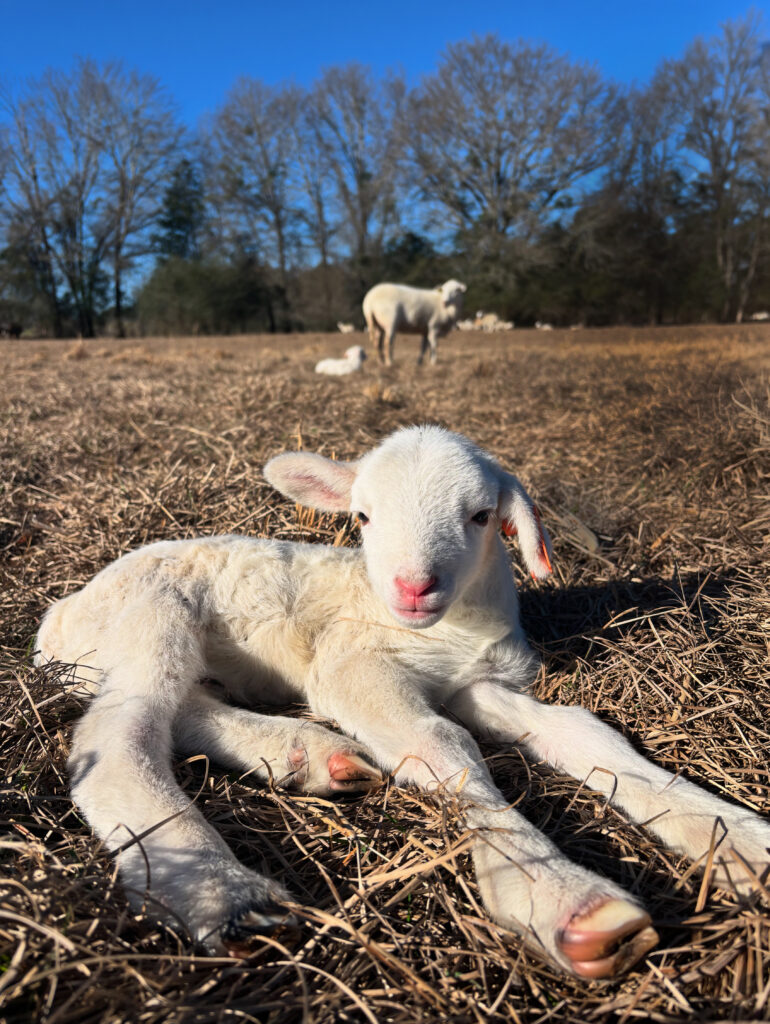
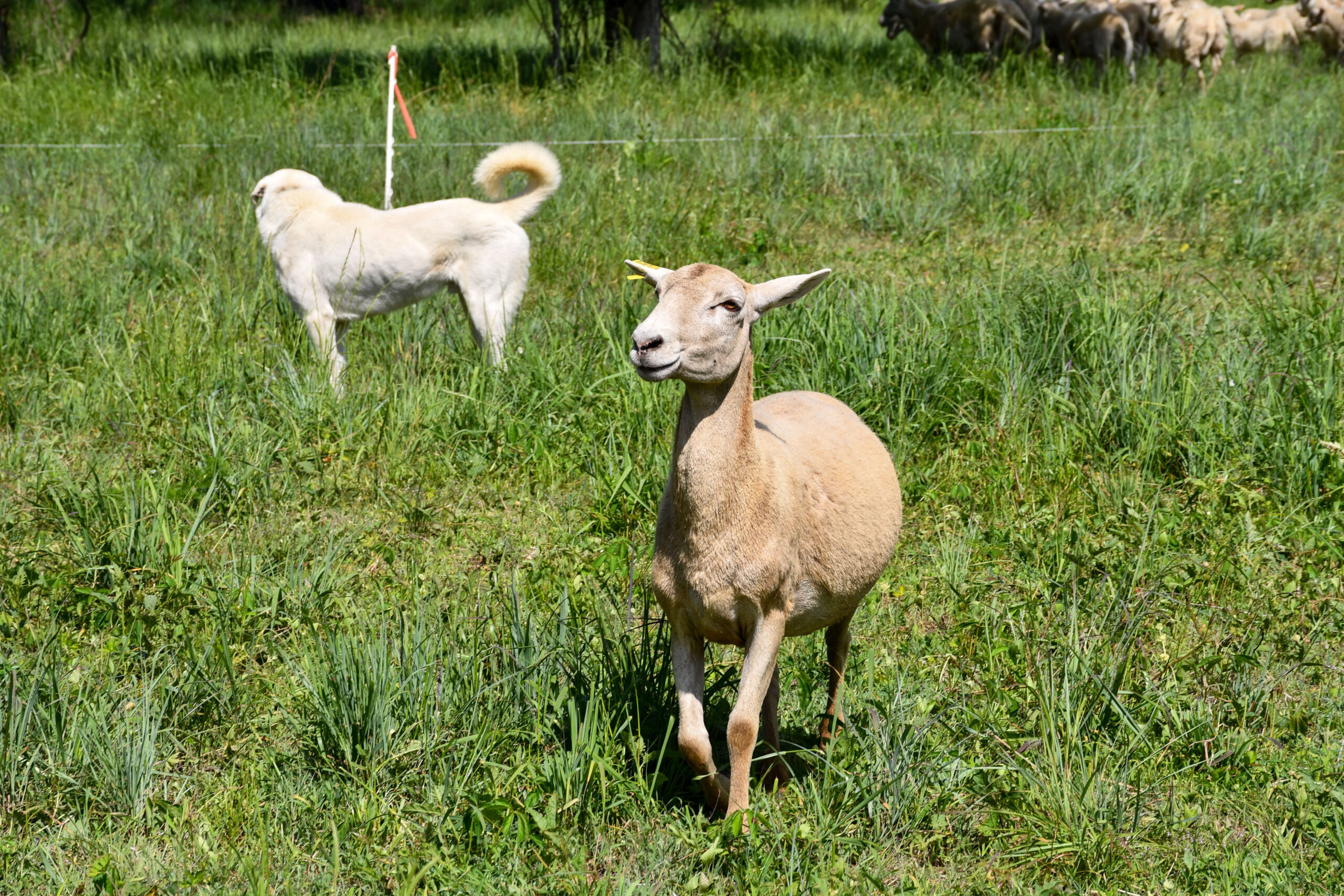
They persevered and moved onto the farm in 2021. They started with broiler chickens, and in 2023, they got their first flock of 16 Katahdin sheep, a hair sheep that naturally sheds its coat in the spring and is primarily raised for meat. Today, Hiccup Farm has around 50 ewes and finished another lambing season in March.
Austin and Brittany grew up in small communities, hearing stories from their parents and grandparents about growing up on farms. They both attended Troy University and married in 2017, buying a home in a Troy subdivision.
With the arrival of their first child, they became more focused on knowing where the food they fed their family comes from and how it is raised, whether produce or meat.
Raising sheep is not necessarily what the Steens thought they would end up doing. Based on their research, sheep seemed less intimidating than starting out with cattle.
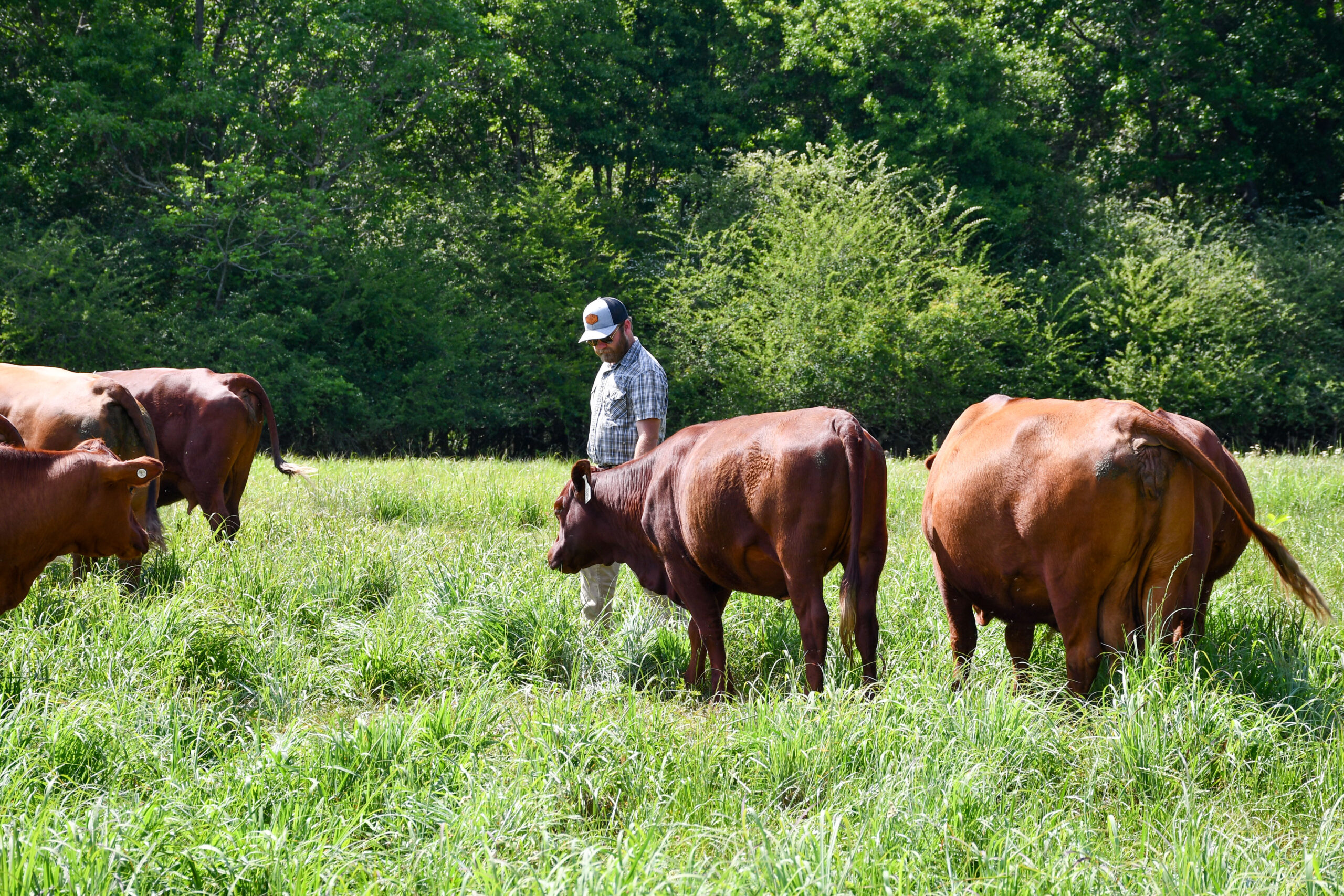
They follow practices known as regenerative farming, which includes using few chemicals on the land and the animals. They also rotate their livestock regularly so no area of the pasture is overgrazed. Because he continues working as an accountant and teaches an accounting class at Troy University, Austin appreciates the low input and sustainability of regenerative farming, but the couple say there’s more to it for them.
“Once we got out here and really started getting our feet wet and farming, we started learning more and more about it — just about how God designed the Earth to renew itself and the nutrients poured into the soil in order to feed the grass, which feeds our animals, which feeds us,” Brittany says. “It’s just that whole circle.”
Hiccup Farm has done most of its business by word of mouth and through Facebook, but it now sells its meat products at Troy’s Terra Cotta Garden Center, where a refrigerated case features lamb, beef and chicken. The farm built a following of repeat customers in the few years since starting business.
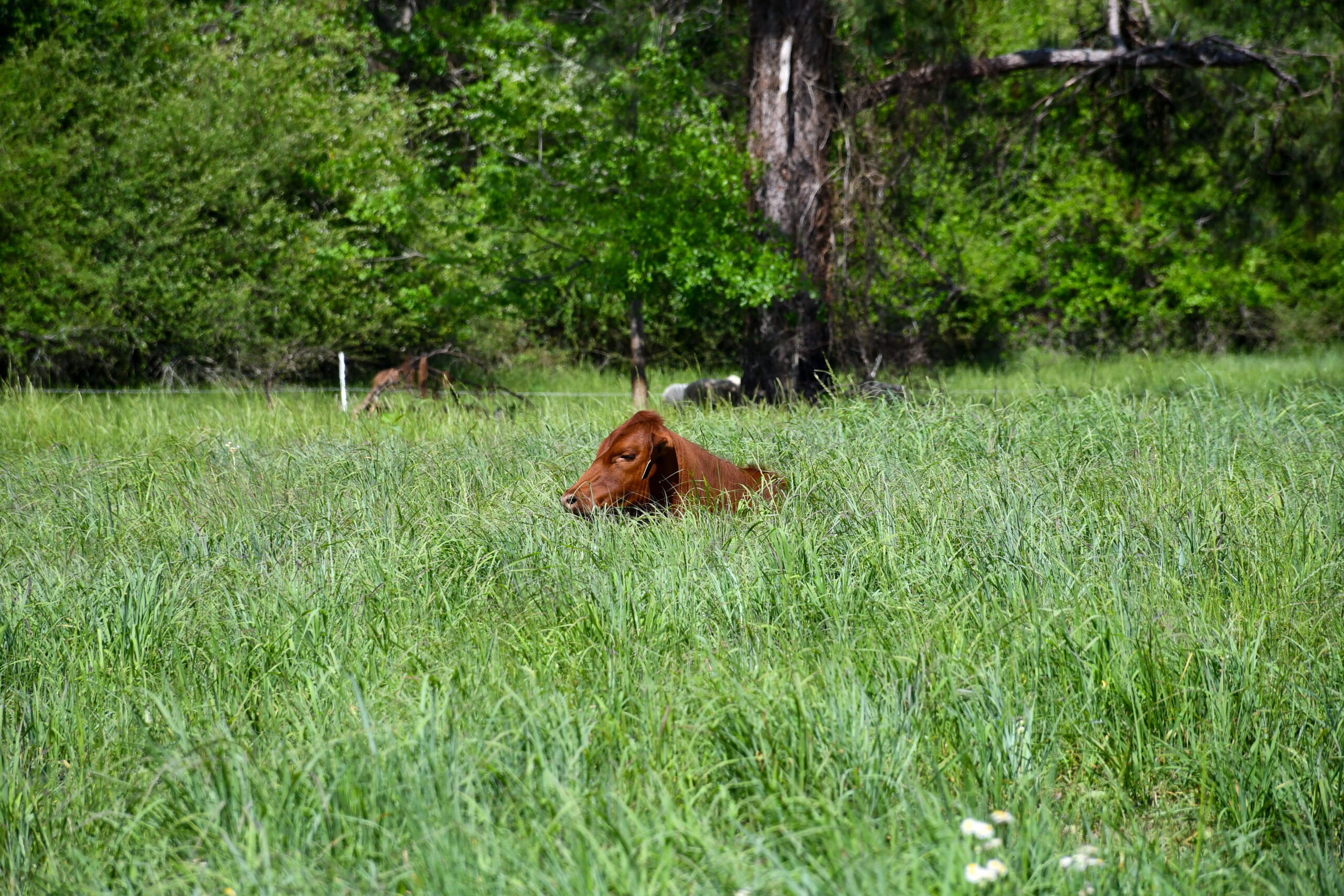
Today, Hiccup Farm includes both sheep and cattle. Processing the meat, the Steens say, has been the biggest challenge. Because they sell retail, meat has to be processed at a USDA-certified facility, and there isn’t one in Pike County. Dothan is the closest place for beef processors, but the Steens currently have their lamb processed nearly two hours away in Colquitt, Georgia. They’ve used six different lamb processors since starting up. Because of restrictions and risk of cross-contamination, many processors just don’t work with lamb, the Steens say.
What produce the Steens grow feeds their family, which now includes 5-year-old Mary Ella, 3-year-old Calvin and 1-year-old Darby, along with a team of farm dogs featuring a border collie, a spaniel, a Great Pyrenees and an Anatolian shepherd to help watch over the flock and herd.
And just as Austin and Brittany envisioned, their children excitedly run around the property, picking wildflowers and following their parents on farm tasks. Austin has been actively working to restore native plant species on the land, and one of Mary Ella’s favorite things is to go out and find the native flowers as they start to bloom.
When Brittany looks back at where they started, it’s with fondness despite the challenges.
“The hiccups, they were obstacles on our journey to getting to where we are now, but they didn’t stop us,” she says. “That just is a testament, I think, to the Lord’s hand in that. He will help you through it and he’ll sustain you even when there are hiccups.”