
Font Size:



In February, all of us romantic guys turn our thoughts to the loves of our lives and how to show them we care on Valentine’s Day. When my wife and I went on our first date as students at Troy State, we went to a movie at the theater downtown on a Wednesday night because tickets were half off.
The movie we went to see was a surefire romantic classic — “First Blood.” How could I think otherwise? Sylvester Stallone already had 1 romantic classic under his belt with “Rocky.” I still get teary-eyed when I hear Rocky calling for Adrian to come into the ring at the end of the fight. Surely, “First Blood” would follow suit.
Over the past few months, I’ve been discussing some of our generation resources that have come online in the past year, including nuclear, solar, and natural gas, as well as the push for electric vehicles. These topics aren’t romantic like “First Blood,” but they’re important to understanding the electric industry.
This month, I’d like to cover the components that are included in your electric bill and the ways they will be changing.
For the 39 years I’ve been in the electric industry, it has always been capital-intensive when it comes to building electric plants. But in the past few years, those costs have risen even more. Back in 2008, PowerSouth committed to buying 125 megawatts of electric power from the 2 new reactors, Units 3 and 4, at the Vogtle Nuclear Plant in Georgia. In 2013, the expected building cost of those reactors was $14 billion. By 2023, that cost had risen to $34 billion, with work still to be completed on Unit 4.
You might wonder why PowerSouth’s board would stay in this program with costs increasing so much. The reason is that, with baseload power plants across the country closing, carbon-free resources like nuclear will be a super asset in the future. It also offers reliable baseload power, which is key for our members.
Similarly, PowerSouth made the decision several years ago to close the Lowman coal-fired plant and replace it with the Lowman Energy Center, which came online last year.
The new facility cost $540 million but it also increased our demand capacity by 40% — something that could not have been achieved by trying to make the coal-fired plant regulation-compliant. So, while it was a big investment, it made financial sense.
Then there’s the cost of building distribution lines across South Alabama Electric’s territory. We’ve discussed the increased price for those materials, but interest rates and the cost of labor and transportation continue to increase, adding to the overall cost of distributing power to serve our members.
So how does all this relate to your electric bill?
Each of these is an example of what we call a fixed cost, one that has to be paid regardless of how much electricity we sell. You can think of it like buying a new car. The cost of the vehicle is still the same whether you drive it 1 mile or 100,000 miles.
This year, you will start seeing fixed costs appear on your bill as a facility charge. Also, you will start to see your kW demand and demand charge on your monthly bill. Demand is the maximum amount of kW power you need over a monthly period. The other component of your monthly bill will kWh’s you used over the month.
It might sound like I’m priming you for a rate increase, but I’m not. We want to break up these charges on your bill so you have a better understanding of where the rate you’re paying comes from. You won’t see this new structure on your bill this month, but it is coming soon.
I hope these quick explanations of the costs facing the electric industry are helpful. We haven’t seen this type of long-term cost pressure in over 40 years, but I know we can get through this crisis together.
Looking back on that first date, “First Blood” may not have been the romantic story I was hoping for. But it still holds a special place for my wife and me. In fact, we recently watched the final chapter of that series, “Last Blood,” not in a theater but streaming at home. Technology may have changed but our love has not. I hope all of you have a romantic month this February.

As we prepare for 2024, it’s important that we not just look at the ups and downs of the last year but reflect on a lifetime of highs and lows. Whether it was the good days or the bad days, we learn from every step of the journey. I’m reminded of Micah 6:8, which says that God requires 3 things of us: to do what is right, love mercy, and walk humbly with him.
It can be hard to keep those in mind every day. But as we start this new year my challenge to you is to accomplish those 3 things in your professional and personal lives even when people might try to pull your focus elsewhere. We’re being told the biggest threat to mankind is climate change. When people say things like this, I also encourage you to explore the subject yourself and not take what someone else says at face value.
1 trend we’re seeing as part of that is the push to go to electric vehicles, or EVs. When I’ve covered this issue in past columns, I’ve said that if it’s a good thing then the American people will support it. If EVs are a bad thing then they won’t. You might ask yourself if EVs are a good thing for an electric utility since we want to sell electricity. They can be if the utility controls when customers are using that electricity.
The key word there is control. Your electric cooperative does not want to control when you use electricity. We would rather set up price signals or rates and allow our members to control their electric usage. As I mentioned earlier, it is good for us to give up control to God. But you can make up your mind whether it’s good to give up control for the government to tell us to drive only EVs. 1 recent paper from the Texas Public Policy Foundation argued that when you factor in the cost of charging equipment and government subsidies, driving an EV costs the equivalent of paying $17 per gallon for a gas-powered vehicle.
I’ve said before that if subsidies are required to promote something it must not be altogether good. But sometimes the government does help provide necessary services, like when your cooperative was founded in 1937. Capitalism would not invest in rural electric systems because the return on that investment was too low, so the government stepped in. However, all the money the cooperative received to build the electric system gets paid back with interest. So I don’t look at that program as a subsidy.
This leads me to some changes our members will see in their electric bill this year. Electric rates have always been broken into a fixed charge that accounts for the cost of building and maintaining the electric system, a demand charge that varies based on the maximum electricity you need at a point in time and a kilowatt hour charge for the amount of electricity you consume over a set period, usually a month.
Looking back over the last year, the inflated cost of electrical equipment has been a financial hindrance to your cooperative. Items like transformers cost 5 times what they did before the pandemic, which puts a greater weight on the fixed cost in your bill.
That’s why we’re exploring a new bill statement that will break out these different charges in a way that is easy for you to read. When you know where each charge comes from, you can have more control over your usage. Moving forward, saving money will be less about simply cutting back on the kilowatt hours you use and more about when you use them.
So, be aware that if you decide to buy an EV and charge it at home, choosing when to charge it will be important. If the electric rates are set up for EVs, then charging it outside of peak hours will have a major impact on making it more affordable to drive. It’s all about keeping our members better informed, which puts the power in your hands.
That power brings me back to what some would say is the biggest threat to mankind. In my mind, it isn’t climate change. The most critical threat to each of us is not knowing who our savior is. If we know that, he can guide us through any challenges we might face. Climate change can’t do that. Until next month, be safe.

Sometimes it feels like we’re up to our chins with the problems of this world. They could be related to politics or religion, violence in Israel, or security at our own border. Just listening to the news can feel overwhelming and cause us to feel hopeless.
I’m reminded of a scene in the series “Band of Brothers,” which documents the journey of Easy Company from basic training to the invasion of Normandy and all their battles through World War II.
In a scene at the end of the first day of the D-Day invasion, Lt. Dick Winters, leader of Easy Company, walks up the road and looks out over the shelling and burning of a town in the distance. With a look of hopelessness on his face, he makes a commitment: “That night, I took time to thank God for seeing me through that day of days. And prayed I would make it through D-Day plus 1. And if, somehow, I managed to get home again, I promised God and myself that I would find a quiet piece of land someplace and spend the rest of my life in peace.”
It’s a reminder that hope isn’t found in a battle, your political party winning power, harvesting that buck of a lifetime, material things, or even Alabama football winning another national championship. Hope is found in God. We celebrate that hope each December with the birth of Jesus Christ. When you put your faith in him, you will have hope.
Looking back on the last year, our cooperative has had its faith tested a few times. This time last year, we set an all-time record for the highest demand ever on our system. On the 1 hand, it was a moment that pushed our distribution system almost to capacity. On the other hand, we were fortunate that many places were closed and it gave us a chance to identify some weaknesses in our system and address them.
1 way PowerSouth Energy Cooperative, our wholesale energy provider, has done that is by expanding its generation resources with the help of South Alabama Electric. We’ve all heard a lot about renewable energy, and in January this year, PowerSouth energized the 80-megawatt Wing Solar project.
Solar power can be a good source of low-cost energy but it’s also intermittent. That means it can’t be relied on as a source of continuous, steady energy when it comes to serving demand at any given time.
That’s why, in September, PowerSouth energized the Lowman Energy Center. This 700-megawatt natural gas generation plant is the most efficient of its kind in the United States. It will provide PowerSouth’s member cooperatives with low-cost, reliable baseload power — power available 24/7 — for many years to come.
Finally, in the early fall of this year, the Vogtle Electric Generating Plant in Augusta, Georgia, brought its third nuclear unit online. Owned by a consortium of power companies, including PowerSouth, the Vogtle plant provides base load power that is also carbon-free. Unit 4 is scheduled to be online by the summer of 2024, bringing even more clean baseload power to our system.
As you can see, we’ve made great strides in adding more generations to support growing demand in 2023. Those 3 resources are very different but they’re all important for serving your electrical needs.
This year, we were fortunate that those needs didn’t include recovering from a hurricane. But we did have several straight-line wind storms in June that added up to more than $700,000 in repairs. Unfortunately, the state of Alabama didn’t qualify for FEMA reimbursement after these storms, so we had to pay for that unexpected outlay ourselves.
As a result, we have been forced to reduce the usual capital credit retirement our members expect to $650,000 this year. We appreciate your understanding as we make the investments needed to keep our system operating reliably. You can look out for your capital credit checks in the mail this month.
Each year we face new challenges and each year we find new ways to work through them as a cooperative and as a community. I know sometimes the problems of this world can leave us feeling hopeless but I encourage everyone to remember that Jesus has already overcome this world. Until next month, stay hopeful.

The month of November always brings so many things to mind for me. The 1st is my mother's birthday. Nan Wilson Roth's faith and strength can't be measured, and to call her my hero would be an understatement. I'm reminded of the old South Central Bell commercial where coach Bear Bryant asked, "Have you called your momma today?” I will definitely heed his advice this month.
I also think of Veterans Day and my dad, retired Lieutenant Colonel Joseph W. Bailey, who enlisted at the age of 16 with his parents' signoff. I'm proud of his service to our country. I think of Thanksgiving and taking some time to be grateful for the many blessings we have in this country, even when we might take them for granted. I think of the start of deer season in Alabama and the simple pleasures of preparing for the hunt.
But here at the cooperative, November is a month for planning. Most of us know the old adage that failing to plan is planning to fail. It's certainly true in the electric industry. This is a month when your cooperative is knee-deep in financial planning, preparing for future construction, mapping out our employment needs, and much more.
Why is all that planning necessary? Just think about someone trying to build new poultry houses at the end of a dirt road with a single-phase distribution line. First, we need to send people out there to see if the distribution line can handle the new load. Then they might need to come back and upgrade those lines or install new equipment altogether. That's why communication from our members about their electric needs is so important.
No matter how detailed our construction plan is, it would be worthless without the proper financial planning to pay for it. That requires figuring out a reasonable electric rate our members can afford while also supporting the construction, operation, and maintenance costs of your electric system.
We plan schedules for our employees far in advance so we're prepared when surprise outages occur. We had our share of those this summer, so you can never underestimate the importance of having teams ready to restore power.
All of that is just at the distribution level. Just like you're a member of South Alabama Electric Cooperative, your cooperative is also a member of PowerSouth Energy Cooperative, a generation and transmission cooperative. PowerSouth has to make long-term plans because it can take years to energize a baseload power plant.
3 years ago, the board of trustees at PowerSouth made the decision to retire the Lowman coal-fired power plant and replace it with a natural gas-fired plant. That decision was mainly due to increasing regulations associated with operating a coal-fired power plant. These costs would have increased your cost of power because there was no increase in energy or demand output. No efficiency gains, just increased cost.
Earlier this year, on September 20, those plans came to fruition as the new Lowman Energy Center officially went online. The cutting-edge facility is the most efficient natural gas plant in the country and generates 693 megawatts of electricity. That's enough to provide our members with reliable power 24/7 for decades to come.
In total, the Lowman Energy Center is an investment of $540 million. That kind of spending requires careful planning, and I'm proud to say PowerSouth has done its homework. Now, when you flip on a light switch at home, you can be confident that the electricity you need will be there. As your local cooperative, we pledge that we'll continue to plan just as carefully for the good of our members.
So, as you travel or prepare to welcome family and friends this November, I hope all of our members will set aside some time to be thankful for our true blessings. Be thankful to our veterans, be thankful for our freedoms and, if you're lucky, maybe even be thankful for that big buck this hunting season. And if you have loved ones you aren't able to gather with, take Bear Bryant's advice and give them a call to let them know how grateful you are for them. Until next month, stay safe, and happy birthday to my mom, Nan.
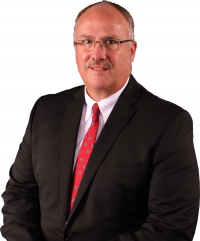
David Bailey
General Manager

By David Bailey, General Manager
 Each year, your cooperative is proud to sponsor our youth leadership programs. These trips take local students to Montgomery to visit various legislative and historical sites, before selecting 2 of those students to visit Washington, D.C.
For my part, it feels like I’m hearing all kinds of negativity about the youth of today. Just recently, I read a story about students at a law school who heckled and walked out on a federal judge because they didn’t agree with him. Stories like that can tarnish our view of today’s young people, but I can tell you that the students we see in our programs are some pretty special individuals.
Still, you might be wondering why an electric cooperative is invested in a youth program like this. It comes back to the seven core principles that guide all cooperatives, starting with our commitment to provide education, training and information to our members.
As a cooperative, we want to help the people we serve understand the business we’re in. But it’s more than that. We also want to help our young people better understand their community and where it fits in on both the state and national levels. That understanding will make them more engaged citizens in our community as they grow older.
In my years here, we’ve been fortunate to have had outstanding young people represent our community and this cooperative year after year. And as proud parents and grandparents, we always want to see those students find great opportunities in their local community.
Which brings me to another cooperative principle: concern for community. If it is a young person’s dream to chase an opportunity far from home, of course we support that. But we also want them to have the chance to go to law school, medical school or a great trade school without moving away from their family, if that’s what they want.
That’s why South Alabama Electric Cooperative is always working to bolster our community by supporting economic development programs that encourage new businesses, relocated businesses and growing businesses right here in our service area.
But for all those efforts, we know that a cooperative can never achieve those goals on its own, nor can it raise young people of the quality we are seeing every day. An independent third party selects the candidates for the Youth Tour each year, and I can tell you the judges always have a very tough time deciding which students to recommend to the cooperative to sponsor.
That tells me the parents, grandparents, teachers, coaches and everyone else helping to raise our young people are doing an excellent job. So, I’d like to take a moment to thank everyone out there who plays a role in shaping the lives of our young citizens. Ultimately, we just want to be a small part of their upbringing and help them learn about some of the opportunities available to them.
I tend to think of it like a church. If your church is not bringing in young people and teaching them how to serve the church and God, then that church will not survive for long. Let’s face it, none of us will be around forever.
In the same way, we don’t want to lose our communities because we didn’t prepare our youth for the future. When they grow up and raise their own families, we want them to be valuable and wise citizens in this community. That’s why we do this.
I’m not sure the students who walked out on that federal judge showed that kind of wisdom. After all, they are law students and the speaker in question was a federal judge. When I was young, I was always taught not to burn bridges. Maybe that’s a lesson they should try to learn. Until next month, stay safe.